
Church of the Transfiguration of the Saviour in Potami
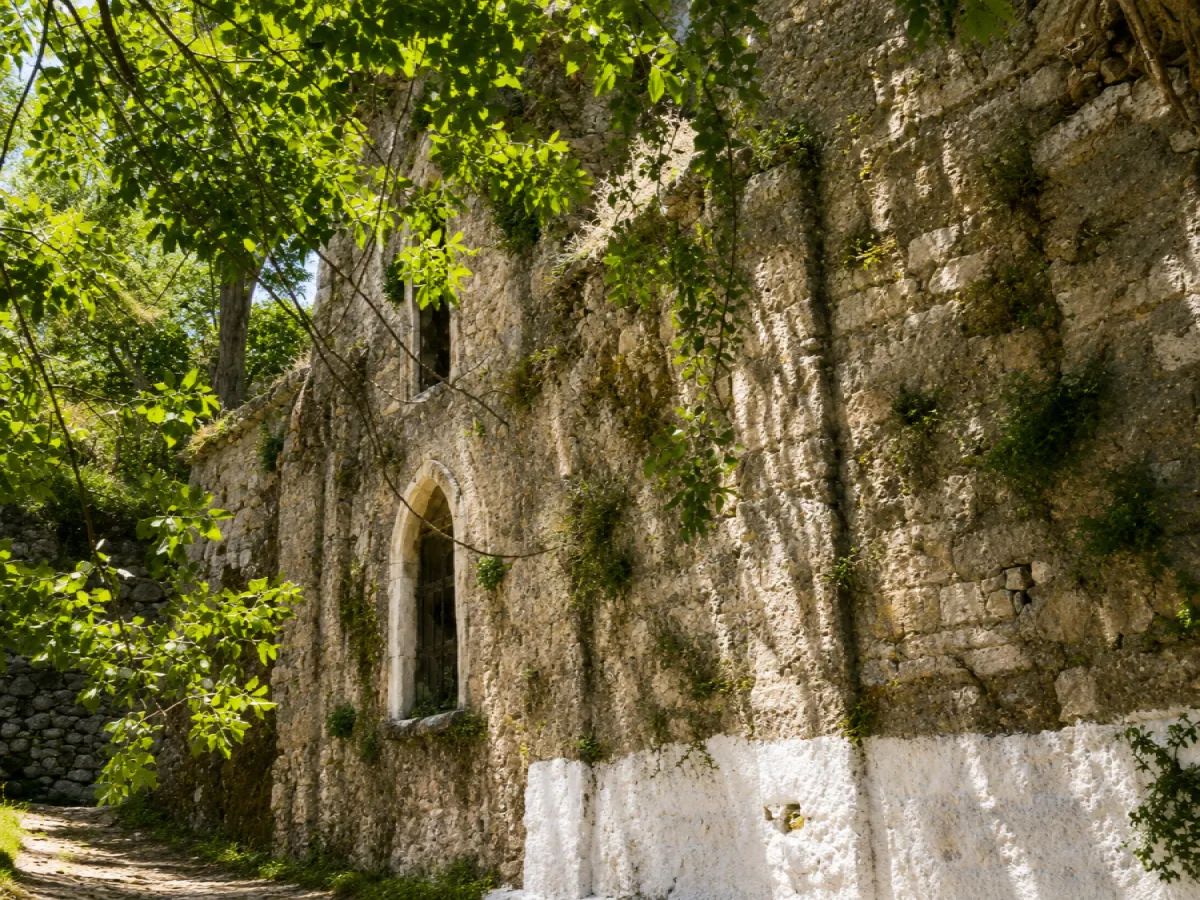
⛪ Church of the Transfiguration of the Saviour in Potami, Karlovasi
In the lush area of Potami, west of Karlovasi, stands the historic Church of the Transfiguration of the Saviour, one of the most important and best-preserved Byzantine monuments on Samos.
The church lies close to the well-known route leading to the Potami Waterfalls and forms part of a wider medieval monumental complex together with the Kastraki of Panagia in Potami and the ruined Byzantine church of Agios Nikolaos.
Its architecture, its history dating back to the 11th century and its close relationship with the other Byzantine monuments of the area make it far more than simply an old chapel along the route to the waterfalls.
📍 Location
The Church of the Transfiguration of the Saviour is located in the Potami area of Karlovasi, surrounded by a lush natural landscape with plane trees, dense vegetation and running water.
Access is from the Potami area, following the trail towards the Potami Waterfalls. The church is reached within the first few hundred metres of the route and is easily accessible on foot.
Its setting combines Byzantine architecture with the natural landscape of western Samos in a particularly distinctive way.
🕰️ An 11th-Century Church
The earliest construction phase of the surviving church dates to the 11th century, during the Middle Byzantine period.
During the following centuries, alterations and additions were made, with the monument continuing to evolve until approximately the 14th century.
The church therefore represents an important testimony to the Byzantine presence on Samos and to the development of ecclesiastical architecture on the island during the Middle Ages.
🏛️ The Architecture of the Church
The Church of the Transfiguration of the Saviour is not a simple single-nave chapel.
It belongs to the architectural type of the cross-in-square, simple four-column domed church, one of the most characteristic forms of Middle Byzantine ecclesiastical architecture.
The central space is organised beneath the dome, while the different sections of the building form a more complex architectural arrangement than that of the simpler later chapels found around Samos.
🏺 The Four Marble Columns
Inside the church, one of the most distinctive features is the presence of four marble columns supporting the dome.
The columns have Corinthian capitals and consist of older architectural material that was reused during the construction of the Byzantine church.
The reuse of earlier architectural elements was common during the Byzantine period and is known in archaeology as spolia.
These elements add even greater historical interest to the interior of the monument.
🧱 Architectural Influences from Constantinople
The exterior of the church displays elements that reflect architectural traditions associated with Constantinople.
Among its characteristic features are:
✅ Blind arches
✅ Decorative organisation of the exterior surfaces
✅ Elements imitating cloisonné masonry
✅ Strong vertical emphasis in the overall design
These features are particularly important for understanding the artistic and architectural influences that reached Samos during the Byzantine period.
⬆️ Strong Vertical Emphasis
Although the church is not particularly large in overall dimensions, the building creates a pronounced sense of height.
The relationship between its ground plan and vertical development is one of the characteristic features of its architecture.
The dome and the organisation of the exterior surfaces further enhance this monumental impression.
🚪 The Former Narthex
A narthex originally stood on the western side of the church.
Most of it has not survived, and today only remains of the structure are preserved.
The loss of the narthex means that the present appearance of the church does not fully correspond to its original Byzantine form.
🏛️ The Vaulted Structure on the Southern Side
On the southern side of the church there is an additional vaulted structure, which communicates with the main church through the sanctuary.
Its exact original function has not been fully established.
It has been suggested that it may have served as a chapel or burial space, although this interpretation cannot be regarded as certain.
Its presence provides further evidence of the different construction phases of the monument.
✝️ Religious Tradition
The church is now widely known as the Church of the Transfiguration of the Saviour and is associated with the Feast of the Transfiguration on 6 August.
Historical and archaeological records also preserve different names for the monument, reflecting its long religious use and the traditions that developed around the church over the centuries.
🏰 Its Connection with the Kastraki of Panagia in Potami
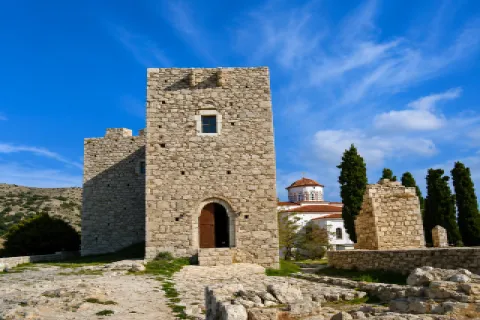
A short distance away, on higher ground, stands the Kastraki of Panagia in Potami, an important Byzantine fortified site.
The church and the Kastraki are not two unrelated monuments.
Archaeological research places them within a wider complex of religious and defensive structures that developed in the area during the Byzantine and medieval periods.
Within the Kastraki itself, remains survive of a small triconch church, a water cistern and other structures.
⛪ The Byzantine Church of Agios Nikolaos
Approximately 150 metres to the north lies the small Byzantine church of Agios Nikolaos.
The monument survives today in a ruined condition, but it is an important element for understanding the historical use of the wider area.
The Church of the Transfiguration of the Saviour, Agios Nikolaos and the Kastraki are the principal surviving elements of the medieval monumental complex in Potami.
🔧 Restoration of the Monumental Complex
In recent years, an important programme of stabilisation, conservation, restoration and enhancement was carried out on the Byzantine monuments of the area.
The works included:
✅ The Church of the Transfiguration of the Saviour
✅ The Kastraki of Panagia in Potami
✅ The Church of Agios Nikolaos
✅ Structural stabilisation
✅ Conservation and restoration of masonry
✅ Work on the buildings within the Kastraki
✅ Landscaping inside the fortified area
✅ Improvement of visitor access
✅ Enhancement of the surrounding area
The project had a total budget of €763,000 and was completed in 2024.
🎉 Reopening to the Public
Following the completion of the restoration works, the monumental complex was once again presented to the public, while the restored church was formally inaugurated in August 2025.
The project did not focus solely on the Church of the Transfiguration itself, but on the wider presentation of the Byzantine monuments in Potami and on improving visitor access to the area.
🚶 Access & Visiting
Access to the church is relatively easy.
From the Potami area, follow the trail towards the Potami Waterfalls. After approximately 250 metres of walking, the church is reached.
The route passes through dense vegetation and forms one of the most attractive first sections of the walk towards the waterfalls.
There is no confirmed daily opening schedule or admission fee comparable to an organised archaeological site, so visitors should not assume that the interior of the church will always be open.
🌿 The Church within the Natural Landscape
One of the most distinctive characteristics of the Church of the Transfiguration of the Saviour is its close relationship with the surrounding natural environment.
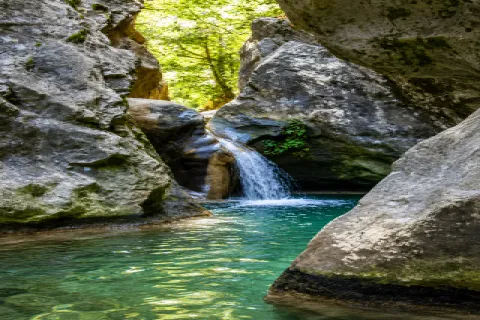
The church is surrounded by plane trees, dense vegetation, rocks and running water, while a little farther on the trail continues towards the Potami Waterfalls.
The sight of the Byzantine church among the trees creates a landscape very different from the better-known coastal attractions of Samos.
👀 What to Look For
During your visit, it is worth paying particular attention to:
✅ The cross-in-square architectural plan
✅ The central dome
✅ The four marble columns
✅ The Corinthian capitals
✅ The blind arches on the exterior façades
✅ The strong vertical emphasis of the building
✅ The surviving remains of the former narthex
✅ The vaulted structure on the southern side
✅ The relationship between the church, the Kastraki and Agios Nikolaos
📷 Photography
The Church of the Transfiguration of the Saviour offers particularly attractive photographic subjects because of the combination of Byzantine architecture and dense vegetation.
Highlights include:
✅ The dome seen through the trees
✅ The stone exterior façades
✅ The architectural decorative elements
✅ The marble columns inside the church
✅ The trail through the vegetation
✅ The overall view of the restored monument
🧭 Places to Combine with Your Visit
Within a short distance are:
✅ Potami Waterfalls
✅ Kastraki of Panagia in Potami
✅ Church of Agios Nikolaos
✅ Potami Beach
✅ Old Karlovasi
✅ Port of Karlovasi
The area is therefore ideal for a complete route combining Byzantine history, architecture, hiking and natural scenery.
⭐ One of the Most Important Byzantine Monuments on Samos
The Church of the Transfiguration of the Saviour in Potami is far more than simply a picturesque old chapel along the route to the waterfalls.
Its architectural form, the four marble columns, the influence of Byzantine architecture from Constantinople, its history dating back to the 11th century and its close connection with the neighbouring Kastraki make it one of the most important Byzantine monuments on the island.
Together with the Kastraki of Panagia and Agios Nikolaos, it forms an exceptional example of the rich medieval heritage of the Potami area, at a place where history coexists with one of the most distinctive natural landscapes of western Samos.



Add new comment