
Psili Ammos Salt Marsh – Wetland of Samos
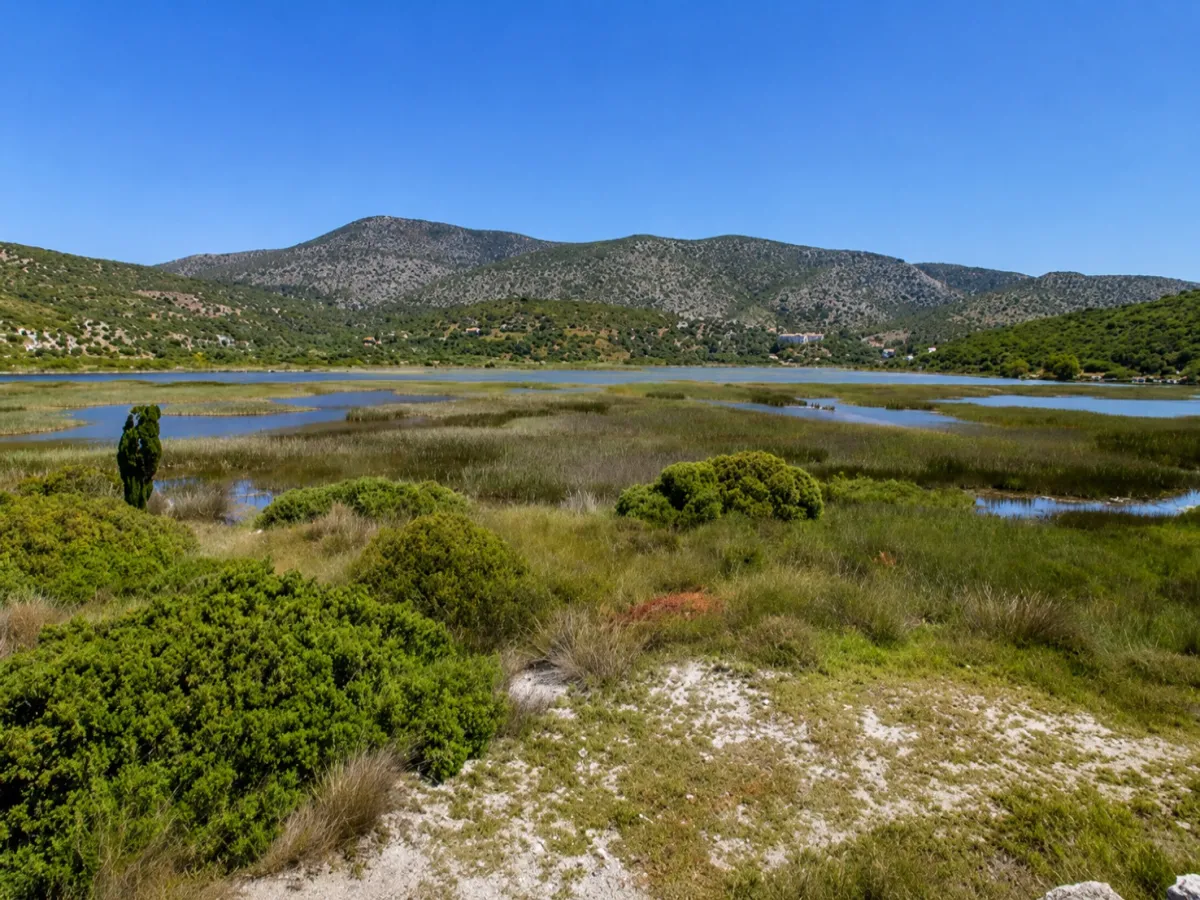
🦩 One of the most important wetlands of Samos
On the southeastern side of Samos, between Mykali Beach and Psili Ammos, lies the Psili Ammos Salt Marsh, one of the island’s most important coastal wetlands.
The area, once used for salt production, has developed into a valuable natural habitat with seasonal shallow waters, reed beds, salt marshes and coastal vegetation.
The geographical position of Samos, very close to the coast of Asia Minor, makes the wetland an important stopover point for birds migrating between Europe, Asia and Africa.
📍 Location
The wetland lies on the southeastern coast of Samos, in the area between Mykali and Psili Ammos, around 10 kilometres from Samos Town and approximately 9 kilometres from Pythagoreio.
To the south stretches the long beach of Mykali, while Psili Ammos lies further east.
Access is easy via the paved road serving the southeastern side of the island, while dirt tracks around the wetland allow visitors to observe the landscape without entering its more sensitive areas.
💧 A seasonal coastal wetland
The salt marsh is strongly seasonal.
During winter and after periods of rainfall, the basin retains water and forms an extensive shallow lagoon.
In spring, water still covers much of the area, creating suitable conditions for migratory waterbirds and waders.
As summer progresses, evaporation increases and much of the water surface may shrink or dry out, revealing the saline ground of the former saltworks.
🦩 Flamingos & migratory birds
Flamingos are among the most impressive visitors to the wetland and are often the species most closely associated with the area.
More than 120 bird species have been recorded here, particularly during winter and the migration seasons.
These include herons, wild ducks, black-winged stilts, ruddy shelducks, kingfishers and various other waterbirds and waders.
The number and composition of birds can change considerably depending on the season, water levels and migration conditions.
🔭 A destination for birdwatching
The salt marsh is one of the best places on Samos for birdwatching.
The most rewarding period is usually from autumn through spring, when water levels are higher and wintering or migratory birds are more numerous.
Binoculars or a telephoto lens make it possible to observe the birds from a distance without approaching the areas where they rest or feed.
Quiet observation is particularly important, since even minor disturbance can cause entire groups of birds to leave the area temporarily.
🌾 Reed beds, salt marshes & coastal vegetation
The wetland is not made up only of open water.
Around the lagoon are reed beds, salt marshes and plants adapted to highly saline conditions, creating a variety of small habitats.
Tamarisk, shrubs and Mediterranean vegetation appear in drier areas, while the immediate proximity of the sea creates a gradual transition from wet ground to the coastal environment.
This diversity of habitats is one of the main reasons for the area’s rich biodiversity.
🧂 From saltworks to natural habitat
The area was used for salt production from at least the 16th century, although its exploitation may have even earlier origins.
During the 19th and 20th centuries, the saltworks developed into an organised production site and formed an important part of the local economy.
Salt production ceased in 1965, when operation was no longer considered economically viable. The facility finally closed in 1982, after the last remaining guard position was abolished.
Following the abandonment of salt production, the old saltworks gradually evolved into a wetland of major ecological value.
🏚️ Traces of the old saltworks
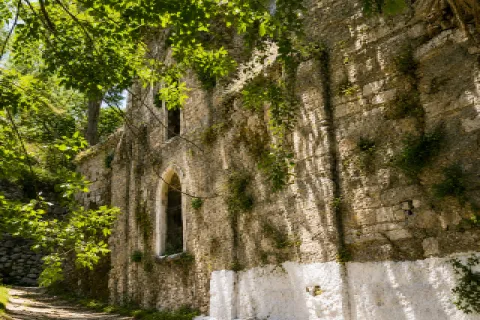
Parts of the old installations used for salt production and management still survive in the area.
Ruins of buildings, stone structures and traces of the former evaporation basins recall the period when the salt marsh was a production site rather than a protected natural landscape.
These remains create an unusual connection between former human activity and the natural evolution of the area.
🛡️ A protected Natura 2000 area
The salt marsh forms part of the European Natura 2000 network of protected areas.
The wider area is protected as Special Area of Conservation GR4120001 – “Samos: Paralia Alyki”, while the wetland and surrounding zone are also included in Special Protection Area GR4120007 – “Samos: Alyki Psilis Ammou”.
Protection focuses both on the habitats themselves and on the area’s importance for birdlife, particularly migratory and wintering species.
🌍 A natural stopover between two continents
The position of Samos opposite the coast of Asia Minor gives the island particular importance for bird migration.
Many species follow coastal routes and use small coastal wetlands as places to rest and feed before continuing their journey.
The Psili Ammos Salt Marsh therefore acts as a small but valuable stopover within a much larger network of wetlands in the eastern Aegean and along the coast of Asia Minor.
🚶 Visiting & exploring the area
The wetland can be observed from the surrounding tracks and roads.
It is not an organised park with developed footpaths and visitor facilities, so exploring the area requires respect for the natural environment.
There is no need to enter the wet basin or reed beds. Observing from a distance provides a better overall view and also avoids disturbing the birds.
Visitors should also avoid leaving litter, making loud noise or approaching nests and groups of resting birds.
📷 Nature photography
The salt marsh offers excellent opportunities for landscape and wildlife photography.
Shallow water, reflections, reed beds and groups of birds can create very different scenes depending on the season and time of day.
For bird photography, a telephoto lens is preferable so that a safe distance can be maintained without disturbing natural behaviour.
🌱 The best season to visit
For visitors mainly interested in birdlife, the period from November to April is usually the most rewarding.
Winter fills the basin with water and attracts wintering species, while spring brings additional migratory birds passing through Samos on their way north.
In summer, the landscape changes significantly as much of the basin may dry out and take on a more arid, saline character.
👀 What visitors will see
The Psili Ammos Salt Marsh is a natural landscape that changes constantly with the seasons.
Shallow waters, reed beds, salt marshes, old salt-production structures and wide open views create an environment very different from the tourist beaches only a few minutes away.
When conditions are favourable, the presence of flamingos and other waterbirds makes the salt marsh one of the most distinctive natural sites on Samos.


Add new comment