
Tanning Museum of Karlovasi, Samos
🧤 Tannery Museum of Karlovasi – The Industrial History of Samos
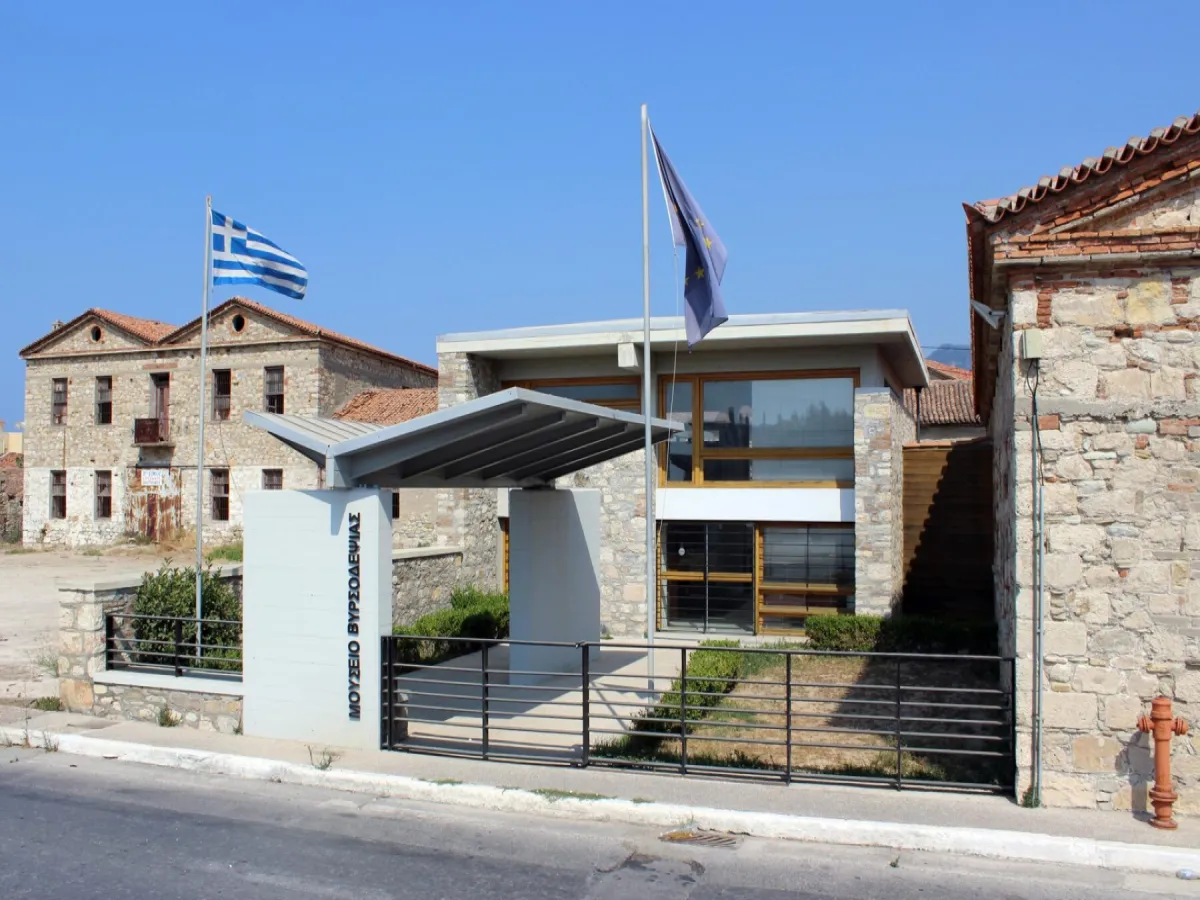
In Neo Karlovasi, in the historic area of the old tanneries, stands a museum quite different from the island’s more traditional folklore collections.
The Tannery Museum of Karlovasi is dedicated to the leather-processing industry that shaped the economic, social and urban development of the town for decades.
It is regarded as the only museum of its kind in Greece, documenting a period when Karlovasi developed into an important centre for the production and trade of leather.
📍 Location
The museum is located in Neo Karlovasi, in the area where the town’s historic tanneries once operated.
Its address is on Lykourgou Logotheti Street, Neo Karlovasi, very close to the distinctive zone of old industrial buildings that still survive in the area.
The setting itself is part of the experience, as the museum stands within the historical industrial landscape of Karlovasi.
🏛️ A Real Tannery Transformed into a Museum
The museum is not housed in an ordinary building later adapted to resemble an old workshop.
It was established in 2009 and is housed in the historic Talabekos–Synadinos tannery, which operated as a leather-processing factory from the early 20th century.
The old industrial building was restored and adapted to accommodate the permanent exhibition while preserving much of its original character.
Its stone masonry, industrial layout and former production spaces form an essential part of the museum experience.
🧵 Tanning and Karlovasi
Leather processing on Samos existed before the great industrial development of Karlovasi.
Small family-run workshops initially operated around the port of Vathy, but tanning experienced its major expansion in Karlovasi during the final quarter of the 19th century.
Archival references to industrial establishments in the sector already exist from 1863, while full-scale industrialisation accelerated after 1880.
Karlovasi gradually developed into one of the most important leather-processing centres in the wider region.
👞 The Famous Sole Leather
A particularly important product was sole leather, thick and durable processed leather mainly intended for the manufacture of shoe soles.
During the industry’s peak period, the tanneries of Karlovasi primarily used vegetable tanning, a method widely used internationally at the time for producing strong sole leather.
Chemical methods and more advanced machinery were later introduced, significantly speeding up the production process.
⚙️ From Workshop to Industry
The great transformation of tanning in Karlovasi took place when manual production began to be replaced by mechanised processes.
The first steam-powered machinery used in the tanning industry of Karlovasi dates to approximately 1889–1890.
Oil engines and electricity were later introduced, while the factories gradually acquired an increasing number of specialised machines.
The development of the port, shipping and trade also played a decisive role in the expansion of the industry.
📈 The Great Period of Prosperity: 1880–1930
The most important period for the tanning industry was approximately between 1880 and 1930.
At the height of production, Karlovasi had around:
✅ 50 tanneries
✅ 300 workers
✅ Production corresponding to approximately 25% of the domestic output of the industry
These figures show the remarkable scale the sector had reached for an island town of that period.
🌍 Trade Beyond Samos
Karlovasi’s production was not intended solely for the local market.
The geographical position of Samos, the development of shipping and commerce and the favourable economic conditions during the Principality of Samos contributed to the outward-looking character of the local businesses.
Leather produced on Samos was exported to markets in Europe, the Balkans and Asia Minor, making tanning one of the island’s major export-oriented industries.
🏭 The Tanneries Changed the Town
The tanning industry did not leave behind only products and commercial records.
It changed the appearance and development of Karlovasi itself.
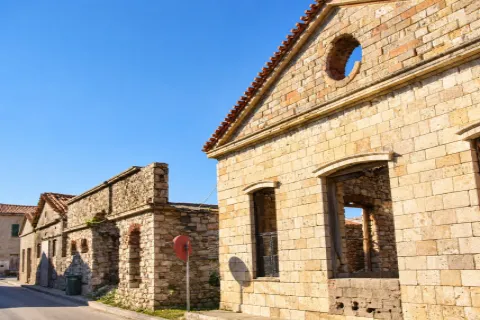
Large stone factories, warehouses, production facilities and the infrastructure created around them formed a distinctive industrial landscape, traces of which are still visible today.
The prosperity generated by the industry also contributed to the urban development of Karlovasi and to the emergence of a strong community of merchants, industrialists and workers.
🏗️ How an Old Tannery Worked
The organisation of the old tanneries reflected the different stages of production.
In two-storey tannery buildings, the lower floor was generally used for the wet stages of production, such as soaking, preparation and tanning of the hides.
The upper floor was mainly used for the dry stages, including drying, finishing, waxing, ironing and preparing the leather for sale.
Water, ventilation and adequate lighting were all essential to the operation of a tannery.
🤝 The First Professional and Workers’ Associations
The large concentration of business owners and workers led to the creation of organised professional and labour associations.
In 1899, the:
“Prophet Elias Brotherhood of Tanners”
was founded, bringing together both employers and workers.
In 1908, it was followed by the:
“Agios Panteleimon Brotherhood of Tannery Workers”
which was specifically a workers’ organisation.
The labour movement among tannery workers on Samos became one of the island’s most active organised labour movements of the period.
📉 The Decline of the Tanning Industry
After its period of great prosperity, the industry gradually began to face increasing difficulties.
New technologies, changes in production methods and, above all, competition from larger industrial centres created conditions that smaller provincial factories struggled to match.
The pressure became particularly severe after 1950, and the tanneries of Karlovasi gradually began to close.
This long period of decline effectively ended towards the close of the 20th century, with the disappearance of large-scale industrial tanning activity.
🏛️ The Creation of the Museum in 2009
The need to preserve the memory of this important period led to the establishment of the Tannery Museum in 2009.
The historic Talabekos–Synadinos tannery was selected to house the museum, creating a direct connection between the exhibits and the space where leather production had once taken place.
The exhibition was developed with the contribution of people who collected tools, machinery, photographs, oral testimonies and historical material from the years when the factories were still operating.
🧰 What You Will See in the Museum
The exhibition presents the history of tanning through authentic equipment and material related to the production process.
Visitors can see:
✅ Leather-processing tools
✅ Industrial machinery
✅ Equipment from the old tanneries
✅ Samples of processed leather
✅ Photographs of workers and factories
✅ Historical documents and information material
✅ Maps showing the locations of the old tanneries
✅ Displays explaining the different stages of leather processing
The exhibition essentially follows the journey of the hide from its initial processing stages through to the finished leather product.
👷 The Everyday Life of the Workers
One particularly interesting aspect is that the museum does not focus only on technology.
Through photographic and archival material, it also presents the everyday lives of the people who worked in the tanneries: their working conditions, specialist skills, organisation of production and the social life that developed around the factories.
A visit therefore offers an insight into both the industrial and social history of Karlovasi.
🏚️ Industrial Heritage Around the Museum
The experience does not end when you leave the museum.
The stone shells of several old tanneries still survive in the surrounding area, forming one of the most characteristic examples of industrial architecture on Samos.
After visiting the museum, it is worth taking some time to observe the surviving factory buildings in the historic tannery district.
🎟️ Opening Hours, Admission & Contact
According to the current visitor information:
Monday–Friday: 08:00–14:00
Saturday–Sunday: Closed
Admission: Free
Telephone: +30 22730 79137
Email: info@mwsamos.gr
Area: Neo Karlovasi, 83200 Samos
Street: Lykourgou Logotheti
Opening hours may change, so it is advisable to confirm the current information before visiting.
👀 What to Look For
During your visit, it is worth paying particular attention to:
✅ The historic tannery building itself
✅ The old leather-processing machinery
✅ Tools used in manual production
✅ Photographs of workers and factories
✅ Maps of the historic tannery district
✅ The transition from manual to mechanised production
✅ The surviving industrial buildings around the museum
📷 Photography
Particularly interesting photographic subjects include:
✅ The stone industrial architecture of the museum
✅ The old machinery inside
✅ Wooden roofs and original construction details
✅ Industrial remains in the historic tannery district
✅ The contrast between modern Karlovasi and the surviving old factories
🧭 Places to Combine with Your Visit
A visit to the Tannery Museum can be combined with:
✅ The old tanneries of Karlovasi
✅ Port of Karlovasi
✅ Old Karlovasi
✅ Potami Beach
✅ Church of the Transfiguration of the Saviour in Potami
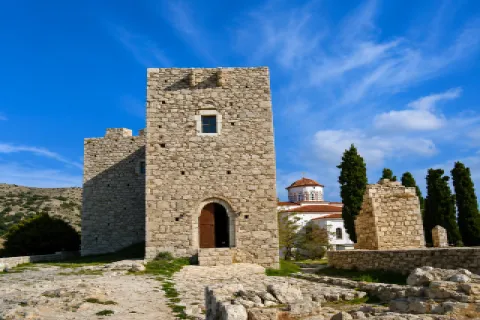
✅ Kastraki of Panagia in Potami
✅ Potami Waterfalls
⭐ When Industry Shaped Karlovasi
The Tannery Museum does not simply present an old method of processing leather.
It tells the story of a period when Karlovasi was one of the most important industrial centres of Samos, with dozens of factories, hundreds of workers, exports and an entire society organised around production.
The machinery, tools, photographs and the historic tannery building itself help visitors understand why tanning is not merely a chapter in the economic history of Karlovasi, but a fundamental part of the town’s identity and industrial heritage.



Add new comment