
Glyfada Lakes – Wetland of Pythagoreio, Samos
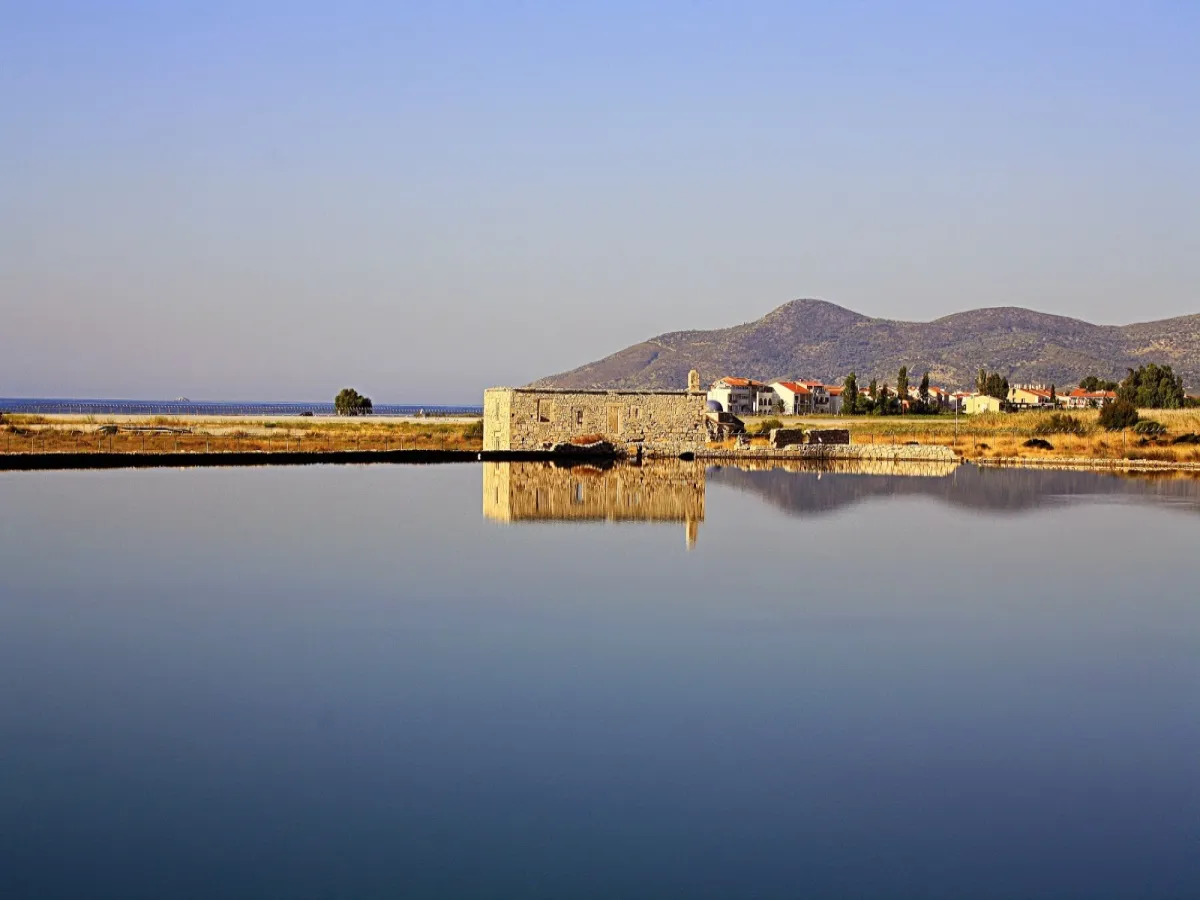
🌿 A small wetland beside Pythagoreio
Only about 1 kilometre west of Pythagoreio lies the wetland system of the Glyfada Lakes, one of the most distinctive natural sites of southern Samos.
The area includes two small lakes and marshy zones with fresh to slightly brackish water, supplied by natural springs.
Although it lies very close to the settlement, the road to the airport and areas of intense human activity, Glyfada continues to function as an important refuge for birds, amphibians, reptiles and other species of local wildlife.
📍 Location
The Glyfada Lakes are located on the western side of Pythagoreio, near the eastern side of Samos Airport.
The main road passes between the two principal parts of the wetland, making Glyfada easy to see and access.
Its location is particularly interesting because the natural landscape coexists with remains of ancient Samos and with important monuments in the wider archaeological area of Pythagoreio.
💧 Small & Large Glyfada
The system is known as Small and Large Glyfada.
The smaller section retains water throughout the year, while the larger lake has been shaped so that it can hold a greater volume of water.
Natural springs feed the system with fresh to slightly brackish water, which then follows natural and artificial channels towards the sea.
The year-round presence of water in parts of the wetland is what allows Glyfada to retain significant ecological value even during the dry months.
🌾 A wetland with different microhabitats
Around the lakes grow wet meadows, rushes, reeds and tamarisks.
The alternation of open water, marshy ground and denser wetland vegetation creates different small habitats where many animal species can find food and shelter.
In spring, the area becomes more colourful and the vegetation particularly lush, while changes in water level constantly alter the appearance of the landscape.
🦆 A refuge for birds
The Glyfada Lakes are especially important for the birdlife of Samos.
Herons, ducks, waders and other waterbirds use the wetland for feeding, resting and, in some cases, breeding.
The importance of the area increases during migration periods, when birds travelling through the eastern Aegean find valuable stopover sites in the small wetlands of Samos.
Together with other wetlands in southern and southeastern Samos, Glyfada forms part of a wider ecological network.
🐢 Life in and around the water
The ecological value of Glyfada is not limited to birds.
Freshwater turtles, amphibians and small fish have also been recorded in the wetland system, while the banks and surrounding vegetation provide shelter for reptiles and smaller animals.
The presence of so many different forms of life in such a small area shows how important even small island wetlands can be.
🏛️ Nature within ancient Samos
One of the most distinctive features of Glyfada is its close relationship with the archaeological landscape of Pythagoreio.
Much of the wetland lies within the wider Archaeological Site of Pythagoreio, in the area once occupied by the ancient city of Samos.
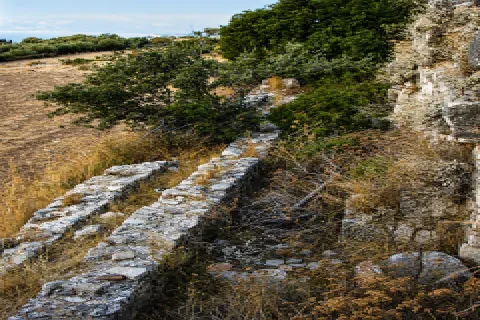
Remains from different historical periods have been identified around the lakes, while sections of the ancient fortifications and other archaeological finds connected with the western part of the ancient city are located nearby.
Visitors therefore encounter natural landscape and archaeology within a very small area.
🏺 Archaeological finds near the lakes
The area around Glyfada has produced important archaeological finds.
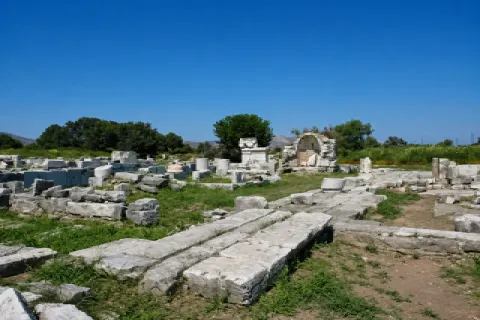
Near the lake, tombs belonging to the western necropolis of ancient Samos, remains of Roman buildings and traces of a sanctuary associated with the worship of Artemis have been identified.
These finds confirm that the modern wetland landscape once lay within an active part of the urban and religious environment of the ancient city.
🏚️ The old watermill
Remains of an old watermill also survive in the area of Large Glyfada.
Its operation depended on the flow of water leaving the lake towards the sea, making use of the natural hydrology of the area.
The ruins are another reminder that the water of Glyfada was not only ecologically important, but was also used by people in later periods.
🌍 Part of a larger wetland network
The Glyfada Lakes do not function in isolation.
Together with the Mesokampos Marsh, the Kampos Choras wetland and the Psili Ammos Salt Marsh, they form important links in a network of wetlands across southern and southeastern Samos.
These small aquatic habitats are highly important for migratory birds moving between the eastern Aegean and the nearby coast of Asia Minor.
⚠️ A sensitive wetland
Glyfada’s location close to the road, airport, cultivated land and built-up areas creates significant pressure on the ecosystem.
For this reason, visits should be made without entering the wet or densely vegetated zones and without disturbing wildlife.
Observation from the roadside and open peripheral points is sufficient to appreciate the character of the wetland.
🔭 Birdwatching & photography
Glyfada is suitable for a short stop, nature observation and photography.
A pair of binoculars makes it easier to observe birds without approaching the shoreline.
Spring and the migration seasons are particularly interesting, although the permanent presence of water in parts of the system allows visitors to experience the wetland landscape throughout the year.
🚶 Visiting
The lakes are easy to reach due to their short distance from Pythagoreio.
This is not an organised nature park with an entrance or specially developed visitor facilities.
Particular care is required near the main road, where traffic can be relatively heavy.
The best approach is a quiet stop at the perimeter of the wetland, without entering the banks or marshy areas.
👀 What visitors will see
At the Glyfada Lakes, visitors encounter a small but remarkably diverse landscape: open water, rushes, reeds, birds, old hydraulic structures and archaeological remains all within a very short distance of one another.
This coexistence is exactly what makes the area special.
In a place now surrounded by roads, homes and the airport, a wetland still survives, continuing to connect the natural environment of Samos with the history of the ancient city.


Add new comment