
Historical and Folklore Museum of Karlovasi – Samos
🕰️ A journey into Karlovasi of the 19th and 20th centuries
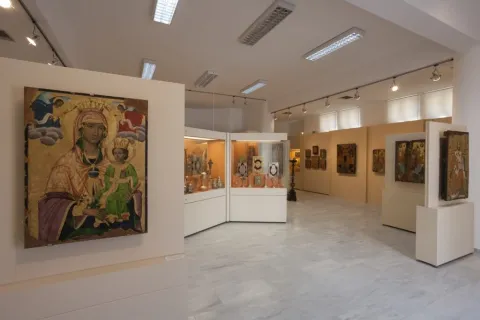
In Karlovasi, Samos, the Historical and Folklore Museum of Karlovasi is dedicated to everyday life, society and the major changes experienced by the town from the late 19th to the mid-20th century.
Its collection includes approximately 1,200 exhibits and mainly covers the period from 1870 to 1955.
One of the museum’s most distinctive features is that it does not present only the traditional rural life of Samos. Alongside the loom, agricultural tools and everyday household objects, visitors can see porcelain, elaborate furniture, urban clothing and other items that reflect the economic prosperity once enjoyed by Karlovasi.
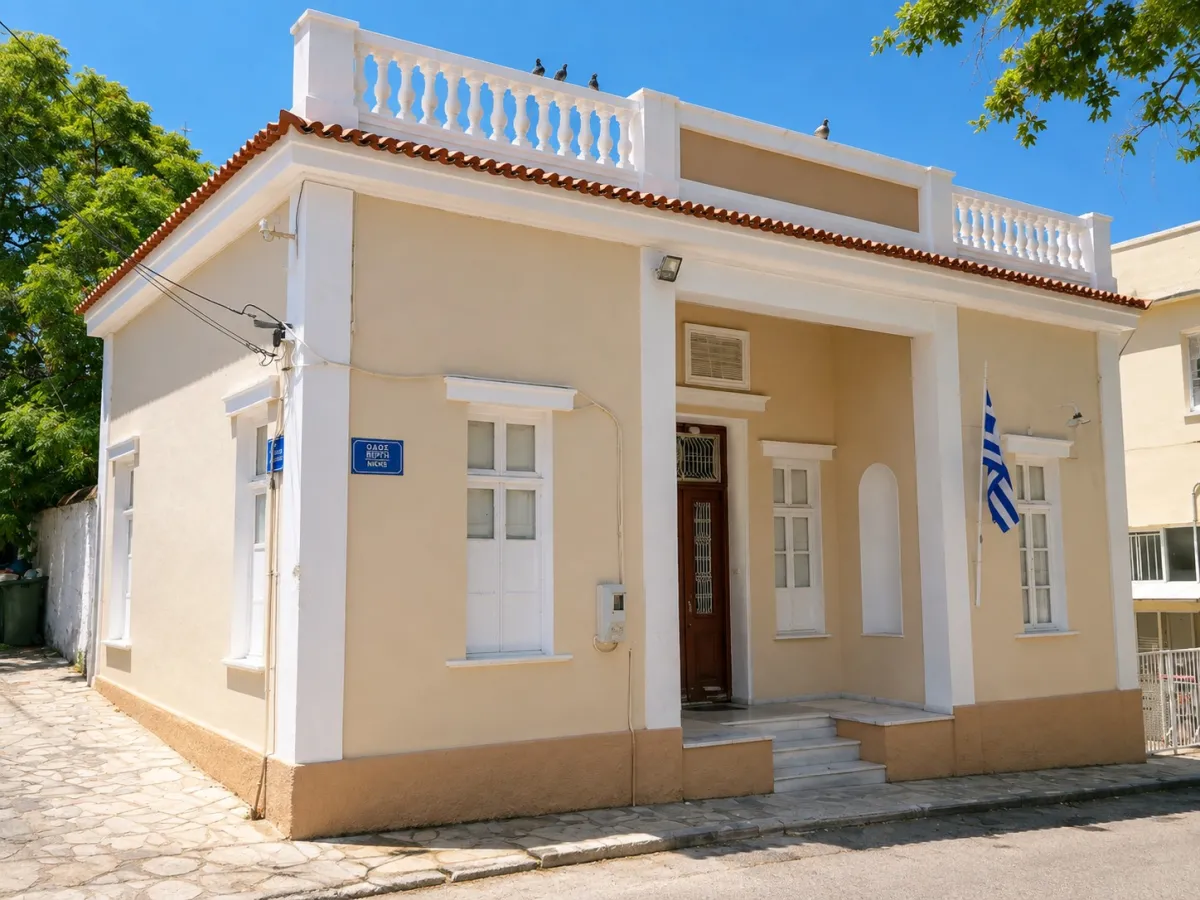
🏛️ A neoclassical building dating from 1899
The building itself is an important part of the museum’s history.
It was constructed in 1899, with funding from the wealthy Karlovasi resident Georgios Vergis, in order to operate as a Municipal Pharmacy for residents who could not afford medicines or private medical care.
The date 1899 can still be seen engraved on a plaque above the main entrance.
The original building included rooms for the pharmacist and doctor, a medicine storage area, a laboratory and a garden.
Almost a century later, the building acquired a new purpose and in 1994 opened as a museum dedicated to preserving and presenting the historical and folklore heritage of Karlovasi.
🌾 Two different worlds within the same collection
What makes the museum particularly interesting is the coexistence of rural and urban folklore.
Karlovasi in the early 20th century was not simply an agricultural community.
The development of tanneries, trade and the tobacco industry created a strong and affluent urban class without completely replacing the traditional rural way of life.
As a result, the museum’s rooms bring together objects from two very different social worlds that existed side by side within the same town.
👗 Urban life & economic prosperity
The rooms dedicated to urban Karlovasi include porcelain and glass objects, some of which were imported from countries such as France, England and Czechoslovakia.
Visitors can also see small pieces of furniture, flower stands, Viennese chairs, carved mirrors, sofas and examples of silver and gold craftsmanship.
Particularly interesting are the urban dresses worn by wealthy women of Karlovasi, revealing a lifestyle very different from the image of a purely agricultural island settlement.
🚬 Trade, tobacco & the industrial town
Karlovasi’s economic development is also reflected through photographs, documents, books, commercial correspondence and old Samian newspapers.
Among the exhibits are even boxes of Samian cigarettes, a small but characteristic reminder of the period when tobacco factories formed part of the town’s economic life.
Together with the history of the tanning industry, these objects help visitors understand why Karlovasi developed into one of the most important commercial and industrial centres of modern Samos.
🍞 The traditional Samian kitchen
Another section of the museum recreates everyday life inside a traditional home.
The kitchen includes the sofras, a low table around which the family would sit, together with utensils and tools used for preparing and preserving food.
Kneading troughs, coffee grinders, containers, ceramics and other everyday objects transport visitors back to a period when many tasks that are now performed mechanically were carried out by hand inside the home.
🧺 The laundry area & household work
A separate reconstruction presents the traditional laundry area.
The exhibits include a cauldron, washing basin, washboard, laundry basket, clay jugs and traditional soap.
These are simple objects, yet they are particularly valuable for understanding everyday life because they remind visitors of the time and physical effort required for even the most ordinary household tasks.
🛏️ The bedroom & the dowry
The reconstructed bedroom includes a traditional bed, woven textiles and a chest containing items associated with the bridal dowry.
Among the more distinctive exhibits is a lace wedding dress dating from 1902, together with clothing linked to wedding customs of the period.
These objects reveal not only the aesthetics of another era, but also the importance of the dowry, family and marriage within the social organisation of local communities.
🧶 The loom & Samian weaving
The loom is one of the most characteristic elements of the folklore collection.
It is displayed together with weaving tools and finished textiles, illustrating the importance of domestic textile production in family life.
Woven fabrics did not serve only practical needs. Their technique, patterns and quality also expressed craftsmanship and formed part of the island’s local cultural tradition.
🪓 Agricultural tools & traditional professions
The collection also includes agricultural implements and tools used in traditional professions, such as shoemaking.
Through these exhibits, visitors discover the side of Karlovasi that remained closely connected with the land and manual production even while the town was developing commercially and industrially.
📜 Photographs, documents & historical records
The collection includes old photographs, books, documents, commercial correspondence and other historical records connected with the social and economic life of Karlovasi.
These materials preserve information about professional activities, trade relations, everyday life and the social changes experienced by the town during the 19th and 20th centuries.
The presence of this archival material gives the collection a strong historical dimension, complementing the domestic and folklore exhibits.
🏙️ The history of a town that changed rapidly
The period 1870–1955 covers one of the most important phases in the modern history of Karlovasi.
During these decades, tanning, trade and industrial activity expanded, factories and warehouses were established, and the town’s urban middle and upper classes grew stronger.
Later, many of these activities gradually declined, but they left a lasting mark on the architecture, economy and social history of Karlovasi.
⚠️ Current status of the museum
The Historical and Folklore Museum of Karlovasi remains closed due to damage caused by the earthquake of 30 October 2020, while the building is undergoing restoration.
This situation is temporary and may change once the necessary works have been completed.
Visitors should confirm that the museum has reopened before planning a visit.
👀 Why it is worth discovering
The Historical and Folklore Museum of Karlovasi preserves a valuable picture of life in the town from the late 19th to the mid-20th century.
Household objects, costumes, tools, furniture, photographs and historical documents help visitors follow the social and economic changes of a period that largely shaped modern Karlovasi.



Add new comment