
Ecclesiastical Museum of the Metropolis of Samos
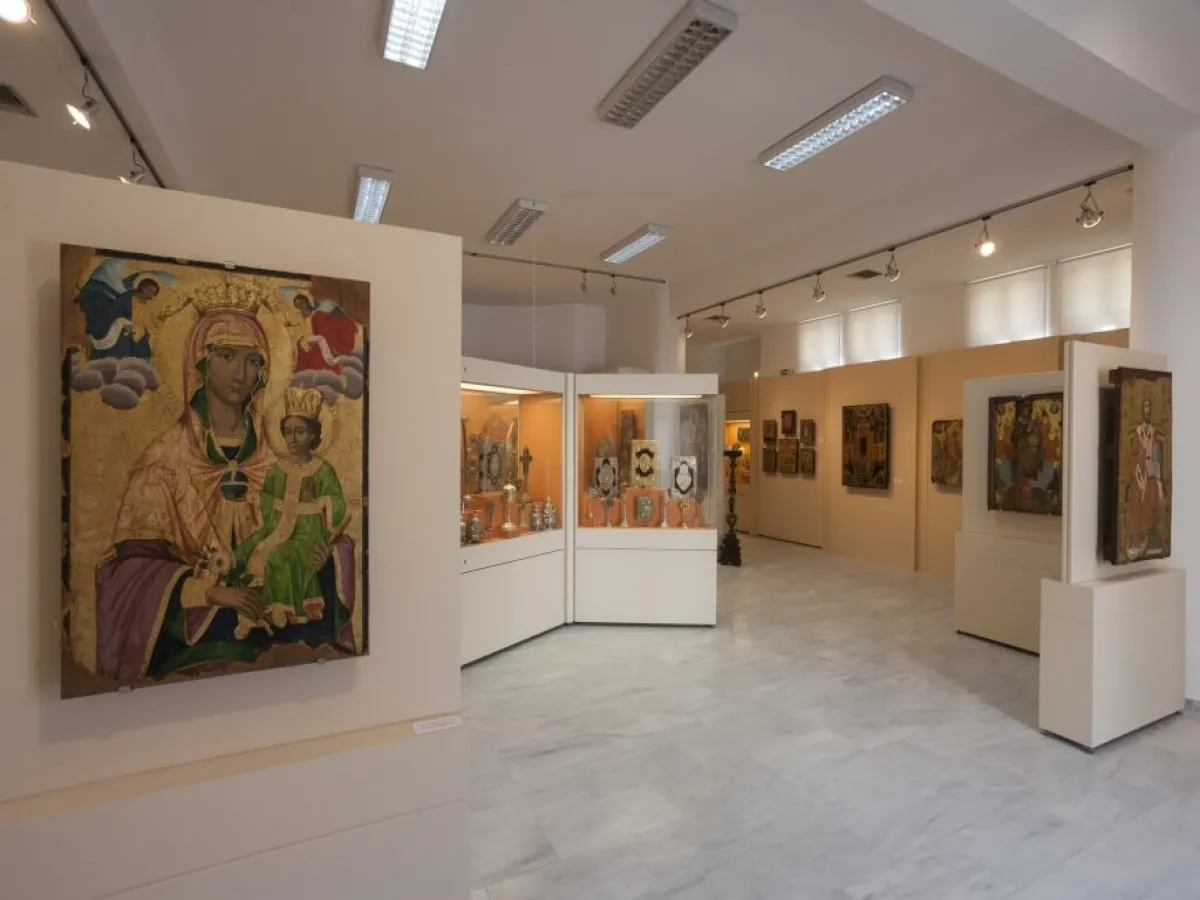
⛪ Ecclesiastical Byzantine Museum of Samos
In the town of Samos stands the Ecclesiastical Byzantine Museum of the Holy Metropolis of Samos, Ikaria and Fournoi, an important cultural institution for discovering the island’s ecclesiastical art, spiritual tradition and the historical development of the local Church.
The museum has been operating since 2006 and was established on the initiative of Metropolitan Eusebios of Samos and Ikaria. Its collections bring together Byzantine and post-Byzantine ecclesiastical treasures from monasteries and churches across Samos, many of which were conserved before being presented to the public.
Icons, woodcarvings, liturgical vessels, crosses, manuscripts and old books create a multifaceted picture of the island’s religious life while also illustrating the development of local ecclesiastical art over the centuries.
📍 Location
The museum is located at 2, 28th October Street, in the town of Samos, within a short distance of the centre and the seafront.
It stands next to the premises of the Holy Metropolis of Samos, Ikaria and Fournoi, while the Church of Agios Theodoros is also nearby. The main offices of the Metropolis are located at number 4 on the same street.
Its central location makes it easy to include the museum in a walking tour of the historical and cultural landmarks of the town.
🏛️ Foundation of the Museum
The Ecclesiastical Byzantine Museum was established in 2006 through the initiative and care of Metropolitan Eusebios.
It is housed in a modern building specially designed for the preservation and presentation of ecclesiastical collections, providing suitable conditions for the protection and display of valuable artefacts.
Its creation made it possible to gather in one organised location objects that had previously been kept in different churches, monasteries and ecclesiastical collections across the island.
🖼️ Byzantine & Post-Byzantine Icons
A significant part of the exhibition is devoted to Byzantine and post-Byzantine portable icons, which are not only objects of worship but also important examples of ecclesiastical painting.
The icons allow visitors to observe different artistic styles, iconographic traditions and cultural influences that reached Samos during different historical periods.
Together with the museum’s other ecclesiastical objects, they connect artistic production directly with the liturgical life of the churches and monasteries from which they originated.
🎨 “The Crucifixion of Christ” by Theodoros Poulakis
Among the particularly important works associated with the collection is the icon “The Crucifixion of Christ” by Theodoros Poulakis.
The work dates from the second half of the 17th century, measures approximately 51 × 43 cm, and originates from the Church of Agios Theodoros in Chora, Samos.
Poulakis was one of the important representatives of post-Byzantine painting. His work combines elements of Orthodox iconographic tradition with influences from Western European art.
This particular icon is also of interest because of the way Western engraved models were incorporated into the composition of the Crucifixion.
🪵 Woodcarvings & Ecclesiastical Decoration
The collection also includes parts of carved wooden iconostases and processional fans, objects that formed an integral part of the interior decoration of Orthodox churches.
Ecclesiastical woodcarving developed considerably during the post-Byzantine period and reflects both the technical skill of local craftsmen and the artistic preferences of each era.
The surviving elements allow visitors to examine details at close range that, inside a church, would often be positioned high above eye level or incorporated into large iconostases.
🏺 Sacred Vessels & Liturgical Objects
The collections also include sacred vessels, blessing and sanctification crosses, and other liturgical objects once used in the churches and monasteries of Samos.
These objects had specific functions during the Divine Liturgy and other services, while at the same time representing important examples of metalworking, silversmithing and decorative craftsmanship.
Through them, visitors can see that ecclesiastical art extended far beyond icon painting and included a wide range of specialised artistic traditions.
👑 Historical Ecclesiastical Treasures
Among the best-known historical objects associated with the museum is the sacred mantle of Ecumenical Patriarch Gregory V, together with other artefacts linked to important figures in modern ecclesiastical history.
The collection also includes ecclesiastical objects associated with Saint Chrysostomos of Smyrna, including his epimanikia, the liturgical cuffs worn by bishops and priests.
Such objects add another dimension to the museum, connecting the ecclesiastical history of Samos with personalities and historical events extending beyond the geographical boundaries of the island.
📜 Manuscripts Dating from the 10th Century
One of the most important parts of the ecclesiastical heritage preserved within the museum complex concerns manuscripts and early printed books.
The museum records among its holdings manuscripts dating as far back as the 10th century, as well as liturgical scrolls, codices, early printed books and rare historical editions.
These documents are particularly valuable for the study of ecclesiastical history, palaeography, liturgical traditions and the history of the written book on Samos.
📚 The Metropolitan Library
The Metropolitan Library of the Holy Metropolis of Samos, Ikaria and Fournoi is housed on the first floor of the museum building.
Its original core was formed from books and handwritten codices belonging to the monasteries of Samos.
As the number of monks in several monasteries declined after the middle of the 20th century, significant parts of their book collections were transferred to the Metropolitan headquarters for safer preservation. From the mid-1960s, Metropolitan Panteleimon I Chrysophakis systematically organised the transfer of these collections.
Later, books from the older library of the Metropolis, donations and substantial parts of the personal libraries of successive Metropolitans of Samos were added.
📖 204 Handwritten Codices
The manuscript collection of the Metropolitan Library is particularly significant.
Earlier scholarly catalogues initially recorded 109 and later 127 manuscripts. Through additional acquisitions and further research, the collection expanded considerably and today, according to the Holy Metropolis, numbers 204 manuscripts.
The material originates from monasteries, churches and other ecclesiastical collections of Samos and represents an important resource for historical and palaeographical research.
📅 Organisation of the Present Library
The Metropolitan Library took its present organised form through the initiative of Metropolitan Eusebios, with the systematic classification and scholarly cataloguing of its collections.
It was officially inaugurated on 27 March 2016, on the floor above the Ecclesiastical Byzantine Museum.
The library contains mainly ecclesiastical, theological, historical and philological books, journals and other printed material, while also serving as an important centre for the study of the ecclesiastical history of Samos.
⛪ Treasures from the Churches and Monasteries of Samos
One of the most important features of the collection is its direct connection with the churches and monasteries of the island.
The objects were not assembled as a general collection of Byzantine art from different parts of the world. They originate primarily from the ecclesiastical life of Samos itself.
For visitors, this means that a tour of the museum is also an introduction to the history of the island’s monasteries, parishes, craftsmen and communities that shaped its religious tradition over the centuries.
🎨 Ecclesiastical Art & Historical Memory
The icons, woodcarvings, liturgical vessels and manuscripts are not isolated artworks without historical context.
They were created for specific churches, used in worship, donated by believers and passed through different historical periods before becoming part of the present collection.
The museum therefore presents both the artistic production and spiritual life of Samos, allowing visitors to view ecclesiastical heritage not only as art but also as historical testimony.
👀 What Visitors Can Discover
A visit to the museum offers a deeper understanding of:
✅ Byzantine and post-Byzantine ecclesiastical art on Samos
✅ Portable icon painting and its different artistic traditions
✅ The craftsmanship of carved iconostases and liturgical objects
✅ Ecclesiastical silversmithing and metalworking
✅ Rare manuscripts, codices and early printed books
✅ The history of the island’s monasteries and churches
✅ The connection of the local Church with important figures of modern history
✅ The development of ecclesiastical life on Samos through the centuries
🕒 Opening Hours & Contact
According to the official information provided by the Holy Metropolis, the museum operates:
Monday–Friday: 10:00–14:00
Saturday: Closed
Sunday: Closed
Address: 2, 28th October Street, Vathy, Samos 83100
Telephone: +30 22730 80802
Alternative telephone: +30 22730 87640
The official website currently does not list a specific admission fee. It is therefore advisable to contact the museum directly to confirm any current entrance charge and possible changes to the opening hours.
🧭 Places to Visit Nearby
A visit to the museum can be combined with other points of interest in the town of Samos:
✅ Archaeological Museum of Vathy, Samos
✅ Pythagoras Square and the seafront
✅ Metropolitan Church of Agios Nikolaos
✅ Church of Agios Theodoros
✅ Ano Vathy and its traditional settlement
✅ The historic and administrative centre of the town
📜 An Archive of the Ecclesiastical Memory of Samos
The Ecclesiastical Byzantine Museum does not simply display individual works of religious art.
Through icons, manuscripts, woodcarvings, liturgical objects and historical treasures, it preserves an important part of the collective memory of the churches and monasteries of Samos.
The presence of the Metropolitan Library in the same building broadens the character of the institution even further, connecting the museum exhibition with historical research and the preservation of the island’s written ecclesiastical heritage.
For visitors wishing to discover Samos beyond its ancient archaeological monuments, the museum offers a different historical journey through centuries of art, faith and written tradition.



Add new comment