
Folklore Museum of Koumeika “Dimitrios Papaioannou” – Samos
🧿 Everyday life in Koumeika from another era
In the traditional village of Koumeika in western Samos stands the Folklore Museum of Koumeika “Dimitrios Papaioannou”, a small but particularly interesting collection dedicated to everyday life, traditional occupations, household activities and the social history of the village.
Its exhibits mainly cover the period from the mid-19th to the mid-20th century and come largely from donations made by residents of Koumeika.
This gives the collection a strongly local character: the objects were not simply gathered to create a general folklore exhibition, but are connected with people and families from the village itself.
🏡 The traditional house of 1880
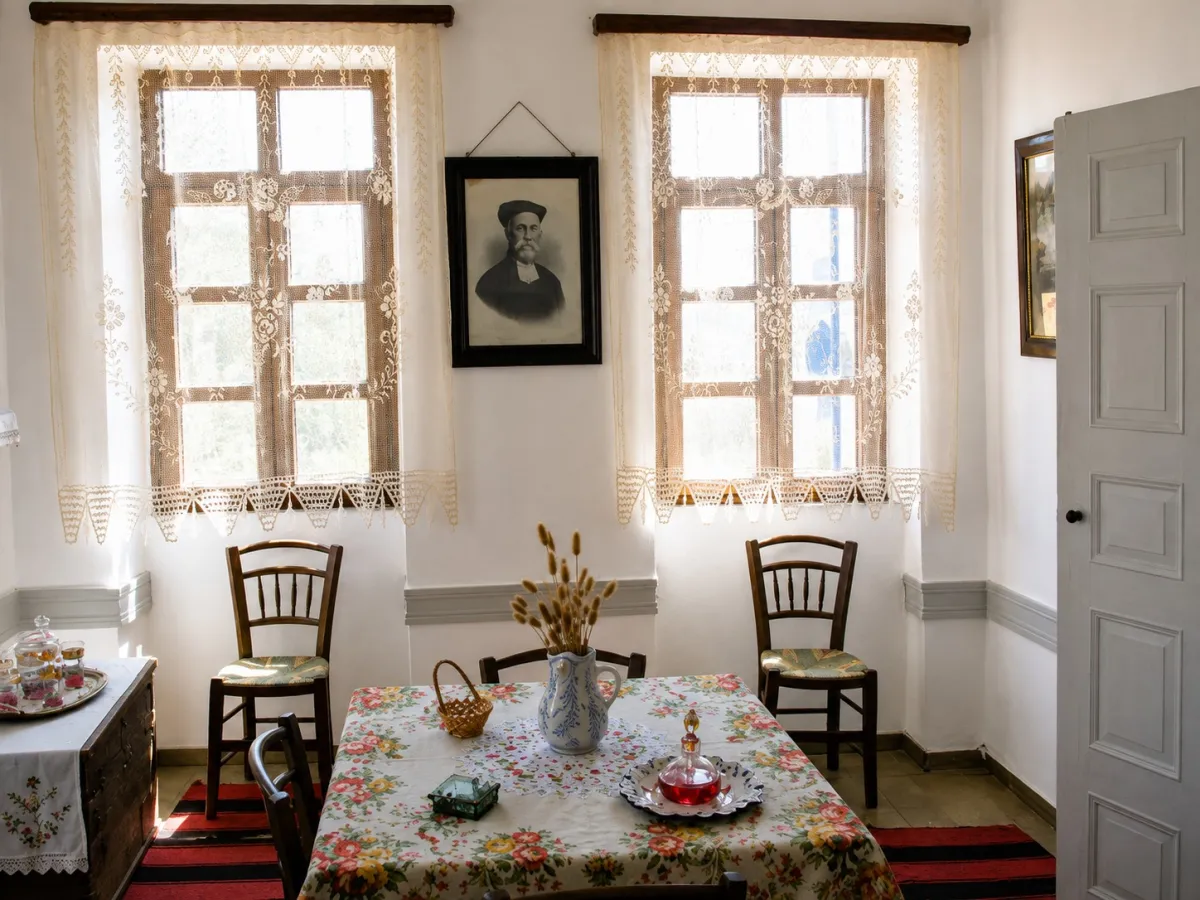
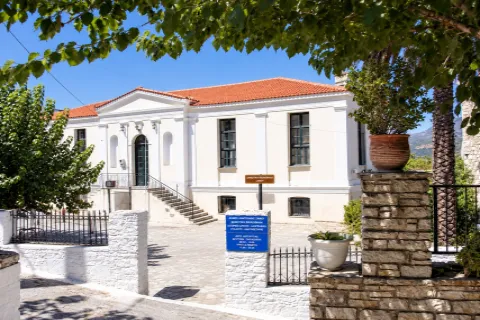
The museum is housed in a traditional Samian house dating from 1880, where Dimitrios Papaioannou lived and grew up.
The property was donated in 2005 by Magda Papaioannou to the Cultural Association of Koumeika for the creation of the museum.
About five years of restoration and preparation followed, and the museum opened in 2010.
The character of the building itself forms part of the experience, helping visitors connect the exhibits with the domestic environment in which they were originally used.
🎁 The donation of the house & the creation of the museum
The property was donated in 2005 by Magda Papaioannou to the Cultural Association of Koumeika.
Around five years of renovation and preparation followed, with considerable voluntary work by members of the Association and support from the then Prefecture of Samos.
The museum finally opened to the public in 2010.
Its creation is a characteristic example of a local initiative aimed at preserving objects that might otherwise have gradually disappeared along with the generations that once used them.
🧵 Embroidery, woven textiles & the loom
An important part of the collection is dedicated to traditional weaving and handicrafts.
The museum displays embroidery, handmade woven textiles and a loom, illustrating the importance of domestic textile production before ready-made industrial products became widely available.
Weaving was an essential skill in many households.
Fabrics for everyday use, dowry items and decorative textiles were often produced within the home itself.
👗 Traditional costumes
The collection also includes traditional clothing, with characteristic examples associated with the 19th century.
These garments are valuable pieces of folklore heritage because clothing could reveal information about age, social status, special occasions and local customs.
Together with the woven textiles and embroidery, they provide an insight into the aesthetics and craftsmanship that formed part of everyday village life.
🏺 Objects from the traditional household
A large part of the exhibition consists of objects used in everyday domestic life.
Among them are glass, copper and ceramic vessels, furniture and various smaller household items.
Today, many of these objects may appear simple or decorative. At the time they were used, however, they formed an essential part of a household and were connected with activities such as cooking, storing food, carrying water and maintaining the home.
🛠️ Traditional tools & work
The museum also preserves traditional tools, reminding visitors how closely everyday life was connected with manual labour.
Koumeika was largely an agricultural community, where daily life depended heavily on cultivation, family production and small traditional trades.
The tools in the collection therefore help visitors understand not only how people lived, but also how they worked to provide what their families needed.
📷 Old photographs & documents
The historic photographs and documents preserved in the collection are of particular value.
Some of this material came from donations made by residents, while objects, photographs and documents were also found inside the Papaioannou family house itself.
The photographs take the story beyond the physical objects. They show people, families and moments of village social life, allowing visitors to connect the exhibits with real individuals.
🤝 A collection created by the village community
The creation of the museum relied heavily on the participation of the local community.
Residents of Koumeika donated old objects, woven textiles, tools, costumes, photographs and family documents, helping to create a collection directly connected with the history of the village.
Most of the exhibits date from the mid-19th to the mid-20th century and present different aspects of the everyday life of earlier generations.
🏘️ The museum within the traditional village
The museum’s location within Koumeika makes the visit even more interesting.
It stands in the traditional part of the village, within a short distance of the square, old houses and narrow streets.
A museum visit can therefore be naturally combined with a walk through the settlement.
The architecture and layout of the village itself help visitors place the objects seen inside the museum within their original cultural environment.
📱 Digital promotion of folklore heritage
The Folklore Museum of Koumeika is included in a network of eight folklore museums on Samos that became part of a programme aimed at digitally promoting their collections.
The programme includes digital infrastructure, interactive applications, virtual tours and augmented-reality technologies designed to make the island’s cultural and folklore heritage more accessible to the public.
⚠️ The 2020 earthquake & restoration
The museum building was damaged by the strong earthquake of 30 October 2020, which affected its operation.
In June 2025, a restoration project for the building was approved with a budget of €456,122.76, aimed at repairing the damage and protecting the collection.
Until the necessary works are completed, access to the museum should not be taken for granted. Visitors should confirm its current operating status before planning a visit.
👀 Why it is particularly valuable
The Folklore Museum of Koumeika preserves an important collection of objects that present everyday life, work and family life in the village during the 19th and 20th centuries.
Costumes, woven textiles, the loom, household utensils, tools, photographs and historical documents help visitors discover different aspects of a way of life that has now largely disappeared.
Together with the traditional house of 1880, the collection forms an important part of the cultural memory of Koumeika.





Add new comment