
Archaeological Museum of Pythagoreio
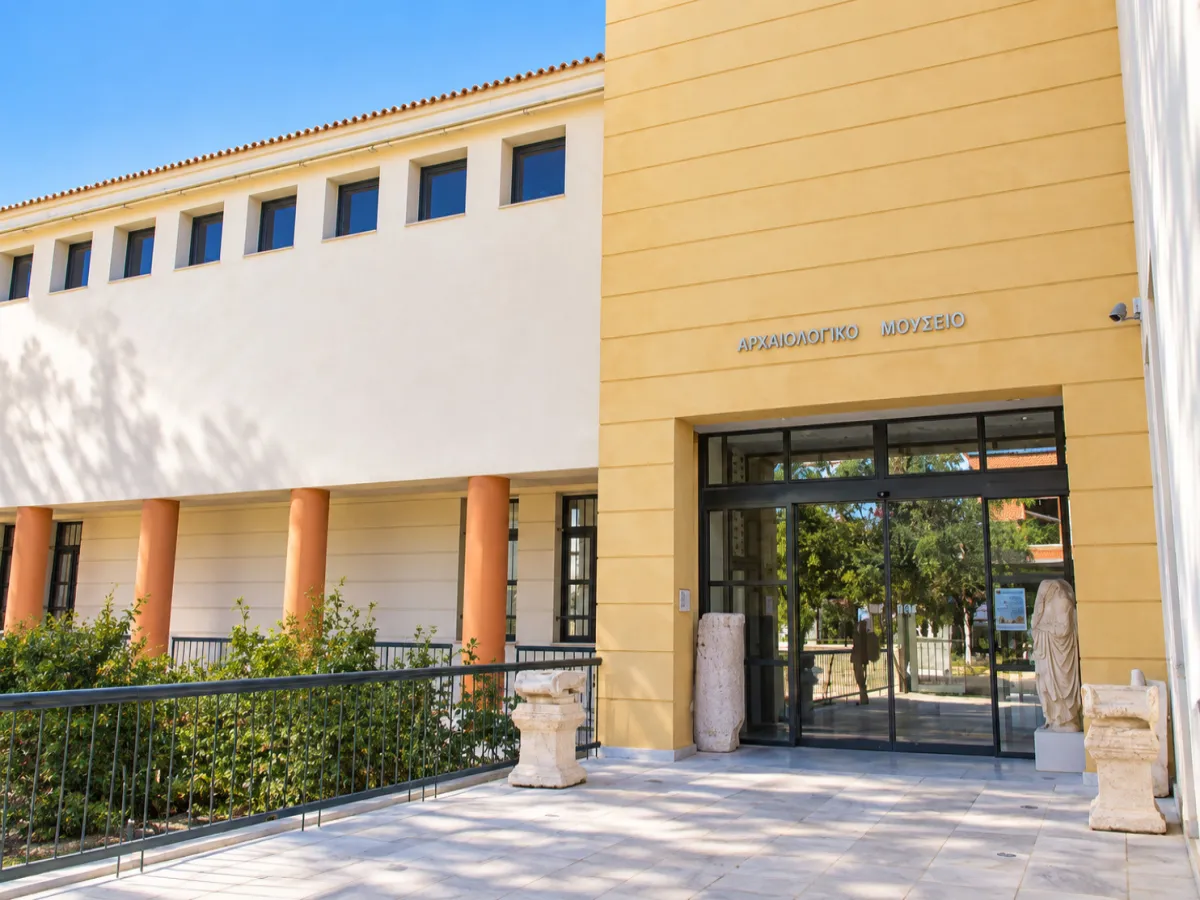
🏛️ Archaeological Museum of Pythagoreio, Samos
In the heart of Pythagoreio, within the area once occupied by the ancient city of Samos, stands the Archaeological Museum of Pythagoreio. Its permanent exhibition includes approximately 3,000 artefacts, presenting a historical journey that extends from the 4th millennium BC to the 7th century AD.
Through sculptures, pottery, inscriptions, funerary monuments, coins and objects of everyday life, visitors can follow the development of ancient Samos over thousands of years. The exhibition sheds light not only on daily life and religious beliefs, but also on the periods when Samos emerged as one of the most important naval, commercial and artistic centres of the Aegean.
📍 Location
The museum is housed in a modern building on Polykratous Street, in the centre of Pythagoreio and within a short walking distance of the harbour.
Its location is particularly significant, as present-day Pythagoreio was built over the ancient city of Samos. Archaeological remains can be seen beside the museum and at numerous other locations throughout the modern settlement, creating a direct connection between the objects displayed inside and the historical landscape from which many of them originated.
The modern museum opened in 2010, providing an organised exhibition space for archaeological finds originating mainly from the ancient city and the surrounding area.
🕰️ Thousands of Years of History
The exhibition is arranged both chronologically and thematically, allowing visitors to follow the development of the area from prehistoric times to Late Antiquity.
The earliest objects are associated with Neolithic settlement and prehistoric activity in southeastern Samos. The collections include finds from the Neolithic settlement of Kastro and the Geometric-period necropolis, as well as pottery covering a broad chronological range from the 9th to the 2nd century BC.
The exhibition then moves into the Archaic period, when Samos experienced its greatest political and economic prosperity, before continuing through the Classical, Hellenistic, Roman and Early Byzantine periods.
⛵ Archaic Samos and the Period of Great Prosperity
The 6th century BC occupies a particularly important place in the museum's historical narrative and represents one of the most remarkable periods in the history of the island.
During this period, Samos emerged as a major naval and commercial power in the Greek world. Economic prosperity, extensive trade contacts and advances in technology and the arts resulted in major architectural, engineering and artistic achievements.
It was within this historical environment that monumental projects such as the Heraion of Samos and the Tunnel of Eupalinos were created, alongside the remarkable Archaic sculptures and funerary monuments represented in the museum's collections.
🏺 The Museum Collections
The approximately 3,000 archaeological objects on display originate primarily from the ancient city of Samos and the surrounding countryside.
The collections include:
✅ Pottery and ceramic vessels from different historical periods
✅ Marble and stone sculptures
✅ Funerary stelae and grave monuments
✅ Sarcophagi
✅ Inscriptions
✅ Coins and coin hoards
✅ Portraits of Roman emperors
✅ Everyday objects and examples of minor arts
The variety of objects allows visitors to explore not only the monumental and public face of the ancient city, but also aspects of social life, economic activity, burial customs and religious practices.
⭐ Highlights of the Collection
Among the most important exhibits of the Archaeological Museum of Pythagoreio are several works representing different periods in the history of Samos.
✅ The seated statue dedicated by Aiakes, dating to around 540 BC. Its surviving inscription records Aiakes as the dedicator and states that the sculpture was offered to the goddess Hera.
✅ The monumental marble sarcophagus, designed in the form of a small temple-like structure with architectural elements. Dating to the second half of the 6th century BC, it is an impressive example of Archaic funerary art.
✅ The funerary stele of Diagoras from Delos, made of porous stone and crowned by a characteristic anthemion decoration. It dates to approximately 530 BC.
✅ A marble funerary stele from Chora, also decorated with an anthemion and dating to approximately 500–490 BC.
✅ The larger-than-life statue of Emperor Trajan, standing 2.71 metres high, one of the most striking pieces in the museum's Roman collection.
✅ Marble portraits of the emperors Augustus and Claudius, reflecting the prominent presence of Roman imperial authority in the city.
✅ A hoard of 300 Byzantine coins from Megali Lakka, dating to the 7th century AD and representing one of the latest historical periods covered by the permanent exhibition.
🪦 Burial Customs & Ancient Society
The funerary stelae, sarcophagi and grave offerings provide valuable information about the beliefs and burial practices of the ancient inhabitants of Samos.
The form, decoration and inscriptions of these monuments were not simply intended to preserve the memory of the deceased. They can also reveal information about social status, family identity and the artistic traditions of different periods.
Through these objects, the museum presents a more personal dimension of ancient society, complementing the story told by monumental buildings and major historical events.
👑 Samos During the Roman Period
The Roman collection demonstrates that the city continued to function as an important urban centre many centuries after the great prosperity of the Archaic period.
Statues and imperial portraits reflect the public presence of Roman authority, while archaeological remains within the ancient city include houses, public buildings, bathing complexes and other infrastructure dating from the Roman period.
The monumental statue of Trajan and the portraits of Augustus and Claudius therefore connect the objects displayed inside the museum with the Roman phase of the city that can still be traced in the surrounding archaeological landscape.
🪙 From Late Antiquity to the Early Byzantine Period
The historical narrative of the museum does not end with the Classical or Roman periods.
Later finds extend into the 7th century AD, demonstrating the long continuity of human settlement in the area. The hoard of Byzantine coins is a characteristic example of this final period represented in the museum's permanent collection.
The exhibition therefore does not focus solely on a single “golden age”, but instead follows the successive transformation of the city across more than four millennia of history.
🏛️ The Museum & the Ancient City
One of the most distinctive aspects of a visit to the museum is its close relationship with the archaeological remains of the ancient city.
Remains of ancient Samos can be found beside the museum and throughout Pythagoreio. Archaeological excavations have revealed sections of the urban layout, roads, drainage systems, public and religious buildings, houses and installations dating from the Roman period.
This physical connection between the museum and the archaeological site helps visitors understand that the objects displayed inside were part of a living city whose remains still exist beneath and around modern Pythagoreio.
🌍 Pythagoreio and UNESCO World Heritage
The importance of the museum becomes even clearer when viewed as part of the wider archaeological landscape of southeastern Samos.
Pythagoreio and the Heraion of Samos have been included on the UNESCO World Heritage List since 1992. Their designation recognises both the major architectural and technological innovations associated with ancient Samos and the island's exceptional importance as a naval and commercial power of the ancient world.
The museum therefore serves as an important introduction to a much larger archaeological complex that includes the ancient city, its fortifications, the Tunnel of Eupalinos and the Sanctuary of Hera.
👀 What Visitors Can Discover
Through the permanent exhibition, visitors can gain a broader understanding of:
✅ The prehistoric settlement of the area
✅ The development of the ancient city of Samos
✅ The great prosperity of the 6th century BC
✅ The worship of Hera and the city's relationship with the Heraion
✅ Archaic sculpture and funerary monuments
✅ Everyday life and social organisation in ancient Samos
✅ Roman rule and imperial portraiture
✅ The continuity of settlement into the Early Byzantine period
The chronological organisation of the exhibition makes it accessible even to visitors without specialist knowledge of archaeology, helping them understand the historical development of the region and the monuments they may later encounter throughout Pythagoreio.
♿ Accessibility & Facilities
The museum provides facilities designed to make the site accessible to visitors with different needs, including:
✅ Access ramp
✅ Lift
✅ Braille signage
✅ Accessible toilets
✅ Museum shop
🕒 Opening Hours, Tickets & Contact
According to the museum's official information:
Opening hours: 08:30–15:30
Tuesday: Closed
Regular admission: €10
Last admission: 20 minutes before closing
Address: Polykratous Street, Pythagoreio, Samos 83103
Telephone: +30 22730 62813
E-mail: efasam@culture.gr
Reduced or free admission may apply to certain visitor categories, while state archaeological museums also offer free admission on specific dates during the year.
Opening hours and ticket prices may change during public holidays, seasonal periods or under special circumstances, so checking the latest official information before visiting is recommended.
🧭 Places to Visit Nearby
A visit to the museum can easily be combined with several major archaeological and historical attractions in Pythagoreio and the surrounding area:
✅ The archaeological remains of the ancient city of Samos
✅ The Castle and Tower of Lykourgos Logothetis
✅ The Church of the Transfiguration of the Saviour
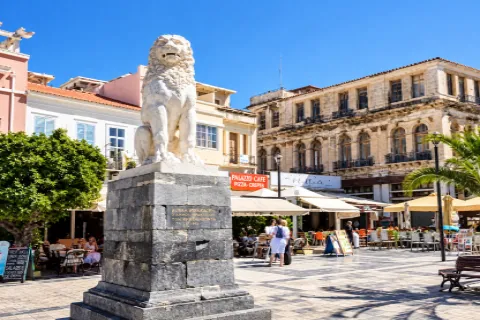
✅ The Statue of Pythagoras at the harbour
✅ The Monastery of Panagia Spiliani
✅ The Tunnel of Eupalinos
✅ The Heraion of Samos
🏺 An Introduction to Ancient Samos
The Archaeological Museum of Pythagoreio is one of the most important places for understanding the history of ancient Samos.
Its exhibits are not presented in isolation from their surroundings. They are displayed within the same area where the ancient city developed, forming a direct link between archaeological objects, monumental engineering works and the people who lived and created here over thousands of years.
For visitors who want to discover Pythagoreio beyond its modern seaside character, the museum is an excellent starting point before exploring the ancient city, the Tunnel of Eupalinos and the Heraion of Samos.


Add new comment