
🐐 Samian Stuffed Goat Shoulder – Traditional Easter Dish
🥣 Ingredients
For approximately 6 servings
For the goat shoulder
- ½ goat shoulder, about 3 kg
- Enough caul fat to cover the shoulder
- ¼ cup olive oil
- 1 tbsp sun-dried tomato paste
- 2 small tomatoes, quartered
- 2 spring onions
- 2 large vine leaves
- A few vine shoots
- Salt
- Pepper
For the filling
- ⅓ cup olive oil
- 2 dry onions, finely chopped
- 6 spring onions, finely chopped
- 3 garlic cloves, finely chopped
- ½ set of goat offal, blanched and finely chopped
- 500 g intestines, blanched and finely chopped
- Peel of ½ lemon
- 400 g Carolina rice
- 1 cup sweet Muscat wine of Samos
- 1 tbsp tomato paste
- 1 small bunch parsley, finely chopped
- ½ bunch fennel, finely chopped
- ¼ bunch mint, finely chopped
- ½ tsp ground allspice
- ½ cinnamon stick
- 6 allspice berries
- 2 bay leaves
- Salt
- Pepper
For sealing
- Thick needle and strong kitchen thread or 3–4 toothpicks
🌿 One of the great festive dishes of Samos
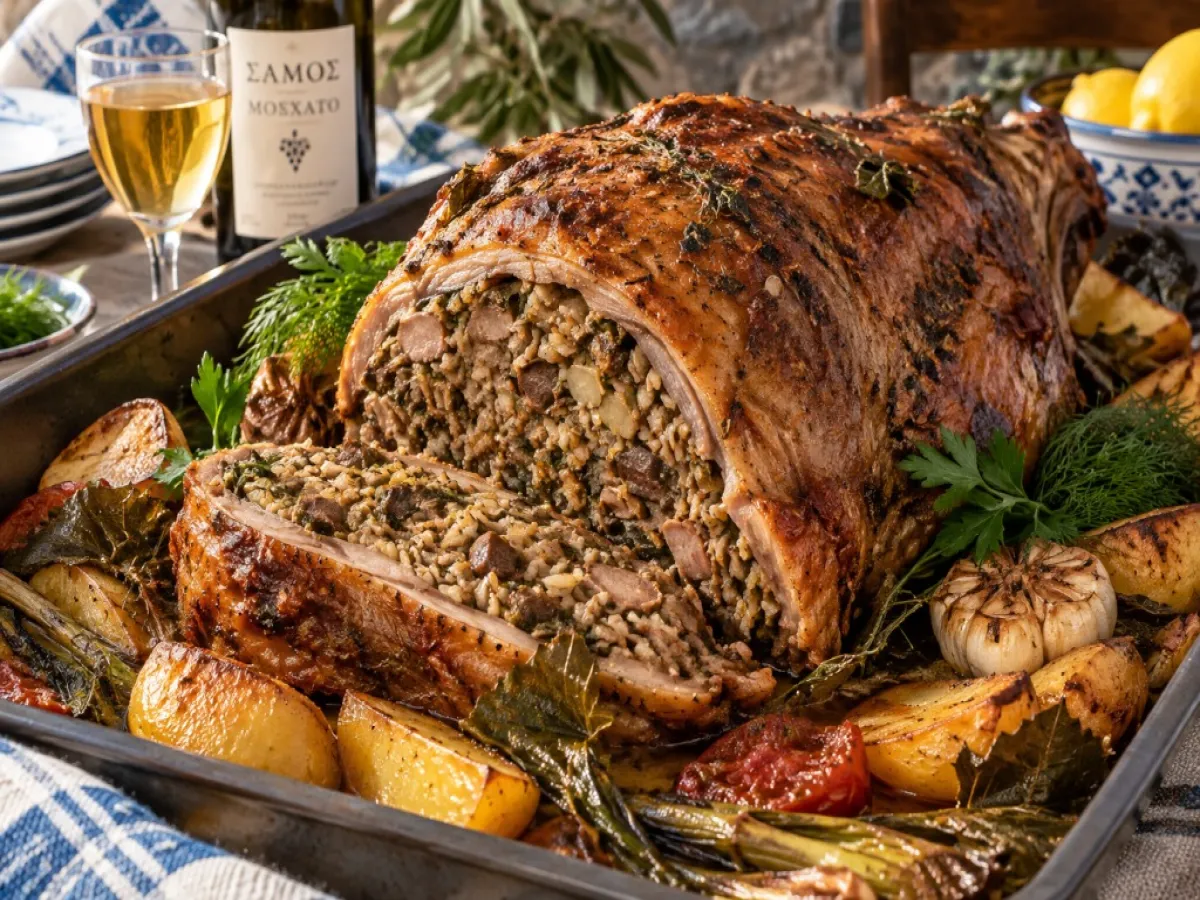
Stuffed goat shoulder is one of the most characteristic festive dishes of Samian cuisine and is especially associated with Easter.
The goat shoulder is filled with a rich mixture of offal, intestines, Carolina rice, onions, garlic, parsley, fennel, mint, allspice, cinnamon and sweet Muscat wine of Samos. It is then carefully sealed and slow-roasted for hours, until the meat becomes exceptionally tender and the filling absorbs all the aromas.
Traditionally, patience is an essential ingredient in this recipe. Slow roasting, often in a wood-fired oven, gives the meat its characteristic texture, almost melting away at the touch of a fork.
👨🍳 Method
1. Prepare the shoulder
Using a sharp knife, carefully create a pocket between the skin and the bones of the goat shoulder, taking care not to tear the skin.
Work slowly with your hands until there is enough room for the filling.
Rub the inside with a little lemon juice and season with salt and pepper.
2. Prepare the aromatics
In a large pot, add the dry and spring onions, garlic, cinnamon stick, bay leaves, allspice berries, lemon peel, a little salt and a small amount of water.
Allow the ingredients to steam until most of the liquid has evaporated.
Add the olive oil and sauté until the onions soften and take on a little colour.
3. Add the offal and rice
Add the blanched and finely chopped offal and intestines and sauté for a few minutes.
Add the rice and stir until it becomes glossy.
Deglaze with sweet Muscat wine of Samos and leave it for a few minutes so the alcohol can evaporate.
Add the tomato paste, a little water, salt and pepper, and cook until the rice begins to absorb the liquid.
4. Add the fresh herbs
Remove the pot from the heat and add the finely chopped parsley, fennel and mint.
Remove the lemon peel, cinnamon stick and bay leaves, then allow the filling to cool completely.
5. Stuff the goat shoulder
Position the shoulder with the opening facing upward and gradually spoon in the filling.
Press gently with your hand so the filling spreads evenly inside.
Close the opening with a thick needle and strong kitchen thread or, alternatively, secure it with toothpicks.
6. Prepare the roasting tray
Mix a little tomato paste with olive oil, salt, pepper and a little water, then rub the outside of the goat with the mixture.
If available, cover the shoulder with caul fat.
You can also add vine shoots, spring onions, whole garlic cloves, tomatoes and vine leaves to the roasting tray to intensify the aromas.
7. Slow-roast
Cover the tray tightly with baking paper and aluminium foil.
Roast in a preheated oven at 220°C for about 1 hour, then lower the temperature to 180°C and continue cooking for another 2 hours, checking occasionally whether more liquid is needed.
Towards the end, remove the cover and allow the shoulder to brown and crisp on the outside.
🥔 Serving
Stuffed goat shoulder is ideally served with roasted potatoes, which can cook in the same tray and absorb the juices of the meat.
Another traditional option is to remove the meat from the tray and add orzo or another coarse pasta to the roasting juices, then continue cooking until the pasta absorbs the rich sauce.
This is a dish that requires time, technique and patience — exactly why it belongs on a major festive table rather than in everyday cooking.


Add new comment