
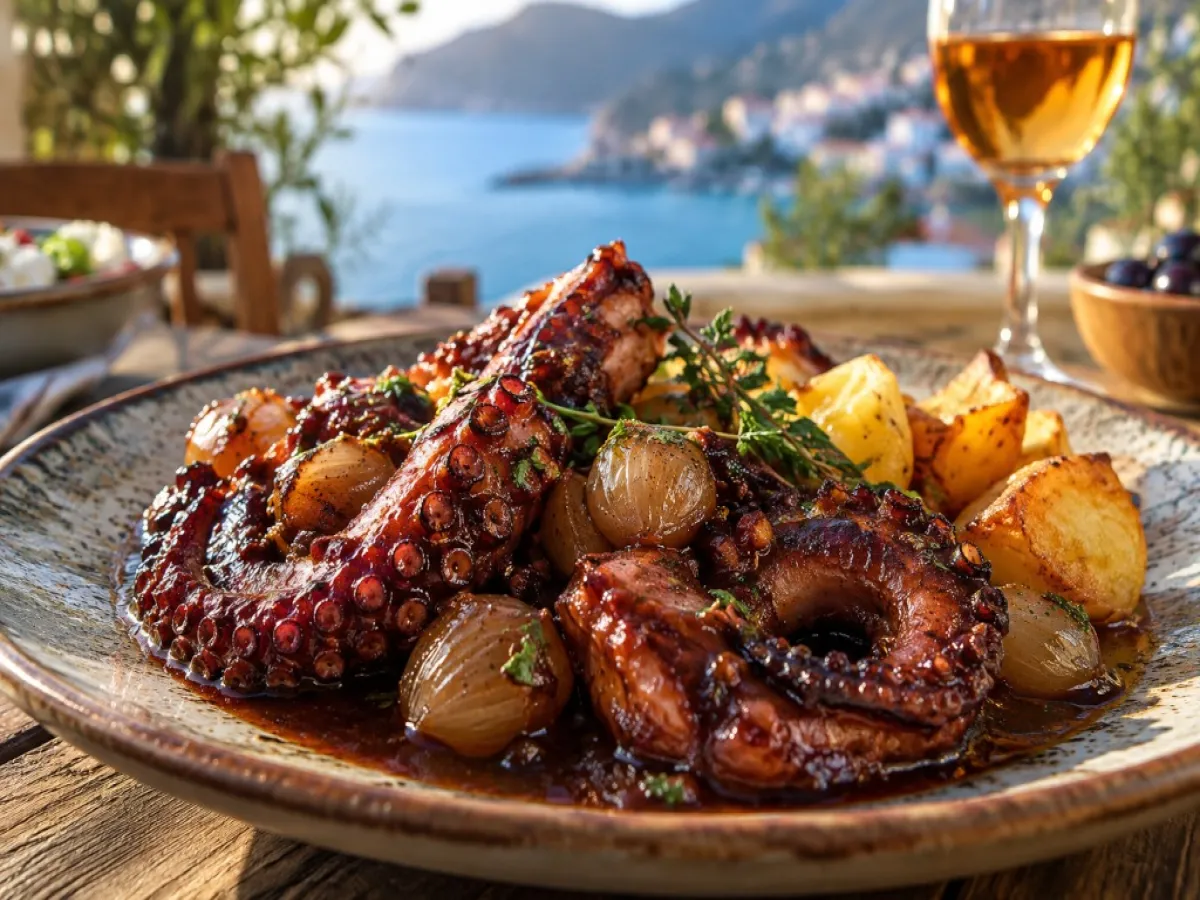
🐙 Octopus with Muscat Wine of Samos and Grape Molasses
🥣 Ingredients
For approximately 4 servings
- About 2 kg fresh octopus, cleaned
- 20 pearl onions, peeled
- 2 garlic cloves
- ¼ cup olive oil
- ½ cup sweet Muscat wine of Samos
- ¼ cup brandy
- 1 bay leaf
- 4–5 allspice berries
- 2 tbsp grape molasses
- ¼ orange
- Salt, sparingly
- Freshly ground pepper
- A little vinegar, optional and to taste*
🍇 Where the sea meets the vineyards of Samos
Octopus with Samian wine and grape molasses is a deeply flavoured dish in which the intensity of the sea meets the aromatic sweetness of Muscat wine of Samos and the concentrated flavour of grape molasses.
Small pearl onions are slowly cooked with the octopus, garlic, bay leaf and allspice. A little orange adds a subtle citrus note, while the grape molasses is added towards the end so that it blends with the cooking juices without overpowering the flavour of the octopus.
The result is not a sweet dish. It is a rich, aromatic, sweet-and-sour octopus with a thick sauce, where the wine and grape molasses add depth rather than simple sweetness.
👨🍳 Method
1. Clean and cut the octopus
If the octopus has not already been cleaned, remove the beak, eyes and contents of the head.
Rinse thoroughly and cut into fairly large pieces.
Do not cut them too small, as the octopus will shrink during slow cooking.
2. Sauté the pearl onions
Heat the olive oil in a large pot over medium heat.
Add the peeled pearl onions and garlic.
Sauté for approximately 10 minutes, stirring occasionally, until the onions soften, become glossy and take on a light golden colour.
Try to keep them whole so that they retain their shape in the finished sauce.
3. Add the octopus
Add the octopus to the pot and sauté for approximately 5 minutes.
It will quickly change colour and begin to release its own juices.
This is completely normal, so there is no need to add water at this stage.
4. Deglaze with Muscat wine and brandy
Once the octopus has changed colour, pour in the sweet Muscat wine of Samos and the brandy.
The recorded version of the recipe also mentions adding a little vinegar at this stage, although no exact quantity is specified.
If using it, add only a small amount so that it brings acidity without dominating the dish.
Cook for a few minutes over relatively high heat so that the stronger alcoholic notes evaporate.
5. Add the aromatics
Add:
- the bay leaf,
- allspice berries,
- the piece of orange,
- freshly ground pepper.
Once the liquid comes to the boil, reduce the heat significantly.
6. Slow-cook
Cover the pot and allow the octopus to cook gently for approximately 1½ hours.
Check occasionally, but avoid stirring too vigorously so that the pearl onions remain intact.
The octopus should be tender at the end while still retaining its structure.
7. Add the grape molasses
During the final 15 minutes of cooking, add the grape molasses.
Gently shake the pot or stir very carefully.
As the dish continues to simmer, the grape molasses combines with the Muscat wine and the natural juices of the octopus to create a thicker, glossy sauce.
8. Taste and adjust the sauce
Before removing the pot from the heat, taste the sauce.
Use salt sparingly, as octopus naturally contains a fair amount of salinity.
If the sauce is still too thin, remove the lid and simmer for a few more minutes until it reduces.
🍊 Orange, allspice and grape molasses
The small amount of orange does not make the dish taste strongly of citrus. Instead, it acts as an aromatic counterpoint to the deeper flavours of the octopus and grape molasses.
Allspice and bay leaf add warm, spicy notes, while the Muscat wine of Samos ties everything back to the character of the island.
That is what makes this recipe particularly interesting: sea, vineyard and citrus fruit in the same pot.
🍽️ Serving
Serve the octopus hot or lukewarm, spooning plenty of the sauce over it and adding some of the whole pearl onions to each plate.


Add new comment