
Paleokastro of Samos

🏡 Palaiokastro, Samos – A Historic Village among Ancient Fortifications and Fertile Land
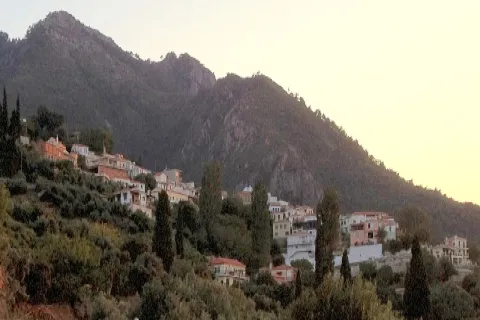
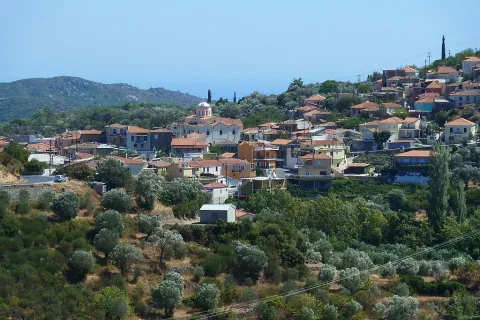
Palaiokastro, also known locally as Paliokastro, is a historic village in eastern Samos, southeast of Samos Town. It is built in a small inland valley at an altitude of approximately 140 metres, surrounded by olive groves, vineyards and cultivated land.
Its position, protected from direct visibility from the sea, is associated with the need for safer settlement during periods of intense pirate activity in the Aegean. The village retains a compact residential centre with narrow streets, older houses, courtyards and features connected with the rural life of eastern Samos.
According to the 2021 census, the settlement of Palaiokastro has 527 permanent residents, while the total population of the Municipal Community of Palaiokastro is 728. Administratively, it belongs to the Municipal Unit of Vathy, the Municipality of Eastern Samos, the Regional Unit of Samos and the North Aegean Region.
📍 Location and Character
Palaiokastro lies approximately 7 kilometres southeast of Samos Town and around 10 kilometres from Pythagoreio. Although it is close to the eastern coastline, the main part of the village developed inside a small valley and is not directly visible from the sea.
Low hills, olive groves, vineyards, orchards and small agricultural properties extend around the settlement. The gentle terrain made systematic cultivation possible and contributed to the development of an economy that depended on agriculture for centuries.
📜 One of the Oldest Villages of Modern Samos
Palaiokastro is considered one of the first settlements established after the repopulation of Samos, which began in the middle of the 16th century.
The age of the village is connected with the former parish Church of the Dormition of the Virgin Mary, whose earliest construction phase is dated to the late 16th century. The settlement is also mentioned in an Ottoman tax register of 1633, when approximately 20 families were recorded. Later descriptions from the 17th century refer to an organised village with agricultural and viticultural activity.
🏰 The Name and Remains of the Fortification
The name “Palaiokastro” is associated with the remains of an old fortified site at Agios Tryfonas, west of the present-day settlement.
Sections of substantial masonry survive in the area and have been described as Cyclopean walls. These remains provide the historical basis for the village’s name and demonstrate the strategic importance of the wider area from earlier periods.
Beside the fortification remains stands the Church of Agios Tryfonas, which has been recorded as a post-1453 monument.
🏺 Archaeological Traces in the Wider Area
The wider Palaiokastro area contains traces of human activity from different historical periods. Building remains, worked marble, pottery and other finds associated with antiquity and the Byzantine era have been reported.
Southeast of the village, near the chapel of Agios Panteleimonas, marble fragments and pottery have also been found. Evidence of human presence continues towards Posidonio and the Mykale Strait, an area of particular strategic importance for controlling maritime movement between Samos and the coast of Asia Minor.
🏛️ Administrative Development
Palaiokastro was designated in 1918 as the administrative seat of the newly established Community of Palaiokastro.
In 1997, under the Kapodistrias administrative reform, it became part of the Municipality of Vathy. In 2010, it was incorporated into the unified Municipality of Samos and, since 2019, has belonged to the Municipality of Eastern Samos.
The Municipal Community of Palaiokastro currently includes the settlements of Argyros, Klima, Posidonio, Charavgi and Psili Ammos, in addition to the main village.
👥 Population and Modern Life
Palaiokastro had a larger population in the past, when viticulture, olive cultivation and other agricultural activities employed a considerable number of local families.
According to the official results of the 2021 census, 527 people live in the main settlement. The Municipal Community, including its coastal and rural settlements, has a total population of 728.
The short distance from Samos Town allows residents to combine the quiet life of the village with easy access to schools, public services, shops and workplaces.
🏘️ The Village Today
Palaiokastro has a clearly defined residential centre, with older and newer houses extending along its main and secondary roads.
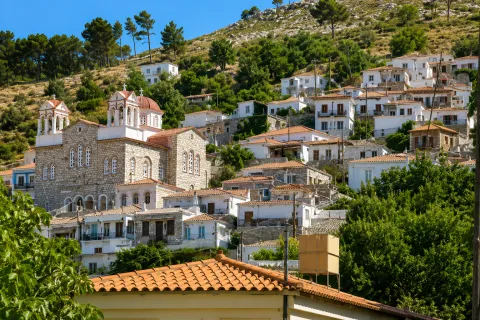
In several places, houses with stone foundations, plastered façades, tiled roofs, wooden frames and small courtyards have been preserved. Modern homes have been added among them without completely altering the appearance of the rural settlement.
The narrower streets and passages of the old centre are best explored on foot. Towards the outer parts of the village, the buildings become more scattered and gradually give way to fields and olive groves.
🏡 Rural Architecture and the Old Olive Mill
The architecture of Palaiokastro is directly connected with its agricultural economy. Many houses were accompanied by storage areas, wine presses, spaces for keeping produce and small vegetable gardens.
An old abandoned olive mill survives in the village, together with parts of its mechanical equipment. It is an important reminder of the period when olive processing and olive oil production were central to the local economy.
⛪ The Church of Agios Georgios
The parish church of Palaiokastro is dedicated to Agios Georgios, not Agios Dimitrios or Agios Nikolaos.
The church was completed in August 1754 at the expense of the village residents, as recorded on a marble inscription at its main entrance. Inside, there is a silver-covered icon of Agios Georgios dating from 1649, while many of the other icons date from after 1860.
The church is the village’s most important religious landmark and gathers residents during the feast of Agios Georgios and the major celebrations of the ecclesiastical year.
🕯️ The Old Church of the Dormition of the Virgin Mary
The Church of the Dormition of the Virgin Mary was the former parish church of Palaiokastro. Its earliest phase dates to the late 16th century and provides important evidence for the early formation of the settlement after the repopulation of Samos.
Together with the churches of Agios Georgios and Agios Tryfonas, it forms part of the religious heritage that reflects the long historical continuity of the area.
🍇 Viticulture and Earlier Production
During the 19th century, viticulture was one of the most important activities in Palaiokastro. Residents produced wine and raisins, using the fertile hillsides and small cultivated plots surrounding the village.
Olive oil, almonds and silk were also produced. Agricultural activity shaped the local economy, the architecture of the houses and the annual working cycle of village families.
🫒 Olive Groves and Cultivated Land
Olive cultivation remains highly visible in the landscape today. Olive groves cover much of the valley and the low hills, while vineyards, fruit trees, orchards and small family gardens appear among them.
Stone terraces, dry-stone walls and rural roads reveal how generations of residents shaped and cultivated the land.
🌿 The Natural Environment
The landscape around Palaiokastro is characterised by low hills, fertile land, olive groves and Mediterranean vegetation.
In spring, the agricultural areas fill with wildflowers and vivid green colours. During summer, the drier shades of the Samian countryside dominate, while the olive trees and orchards preserve the cultivated character of the landscape.
The small rural roads around the village are suitable for short walks, although care is required because of passing vehicles and the high temperatures of the summer months.
🏝️ From the Village to the Eastern Coast
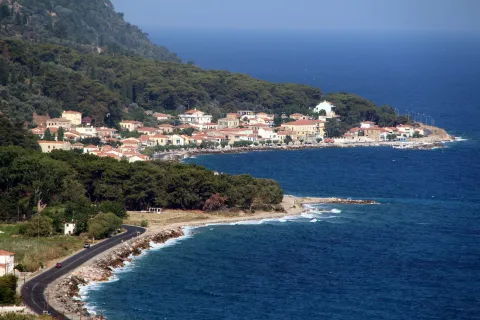
The Municipal Community of Palaiokastro extends towards the eastern and southeastern coast of Samos and includes some of the best-known seaside settlements in the area.
Posidonio, Charavgi or Kerveli, Klima and Psili Ammos connect the agricultural interior with the sea. These areas have beaches, small bays and tourist facilities that operate mainly during the summer.
Near Psili Ammos lies the protected Alyki wetland, an important ecosystem for birdlife and the natural biodiversity of southeastern Samos.
🌿 What to See
During your visit to Palaiokastro, take time to discover:
✅ The old residential centre
✅ The Church of Agios Georgios, completed in 1754
✅ The silver-covered icon of Agios Georgios dating from 1649
✅ The old Church of the Dormition of the Virgin Mary
✅ The Church of Agios Tryfonas
✅ The surviving sections of the old fortification
✅ The narrow streets and traditional houses
✅ The old olive mill
✅ The olive groves and cultivated land
✅ The rural roads around the valley
✅ The coastal settlements of the community
✅ The Alyki wetland near Psili Ammos
🚶 The Visitor Experience
A visit can begin in the central part of the village and at the Church of Agios Georgios before continuing through the smaller streets, the older neighbourhoods and towards the outer edges of the settlement.
Palaiokastro is not an organised tourist destination with a sequence of major attractions. The experience is based on the history of the village, its rural architecture, religious monuments and quiet everyday atmosphere.
Approximately 60–90 minutes are sufficient for a relaxed exploration of the main points. More time is needed when the visit is combined with Agios Tryfonas, the fortification remains or one of the eastern beaches.
📆 When to Visit
Spring: The best season for walking, wildflowers and a lush agricultural landscape.
Summer: Visit in the morning or late afternoon, when temperatures are lower.
Feast of Agios Georgios: The village experiences increased religious and social activity.
Autumn: Suitable for quiet exploration, photography and scenes connected with agricultural work.
Winter: The area remains easily accessible, although care is needed on smaller roads after heavy rainfall.
🧭 How to Get There
Palaiokastro is reached by paved road from Samos Town. The distance is approximately 7 kilometres and the journey takes only a few minutes, depending on traffic.
The village lies around 10 kilometres from Pythagoreio, 32 kilometres from Karlovasi and 45 kilometres from Marathokampos.
The main roads are accessible with a conventional car. Low speed is necessary in the narrower parts of the old centre, and it is preferable to park in a safe place and continue the visit on foot.
ℹ️ Useful Information
✅ Official name: Palaiokastron
✅ Local name: Paliokastro
✅ Administrative community: Municipal Community of Palaiokastro
✅ Municipal unit: Vathy
✅ Municipality: Eastern Samos
✅ Population of the settlement in 2021: 527 residents
✅ Population of the Municipal Community in 2021: 728 residents
✅ Altitude: Approximately 140 metres
✅ Character: Historic and agricultural settlement
✅ Administrative seat since: 21 September 1918
✅ Parish church: Agios Georgios
✅ Completion of the church: August 1754
✅ Historic fortification: Agios Tryfonas area
✅ Distance from Samos Town: Approximately 7 kilometres
✅ Distance from Pythagoreio: Approximately 10 kilometres
✅ Distance from Karlovasi: Approximately 32 kilometres
✅ Distance from Marathokampos: Approximately 45 kilometres
✅ GPS coordinates: 37.7380, 27.0000
✅ Postal code: 83100
✅ Main traditional crops: Olives and grapevines
✅ Road access: Paved road
✅ Suggested visiting time: Approximately 60–90 minutes
✅ Ideal for: History, architecture, religious monuments, rural landscapes, photography and walking


Add new comment