
Mikro Seitani Beach | A Hidden Treasure of Samos
🏖️ Mikro Seitani Beach, Samos
A small pebble cove between white cliffs, crystal-clear water and protected natural surroundings
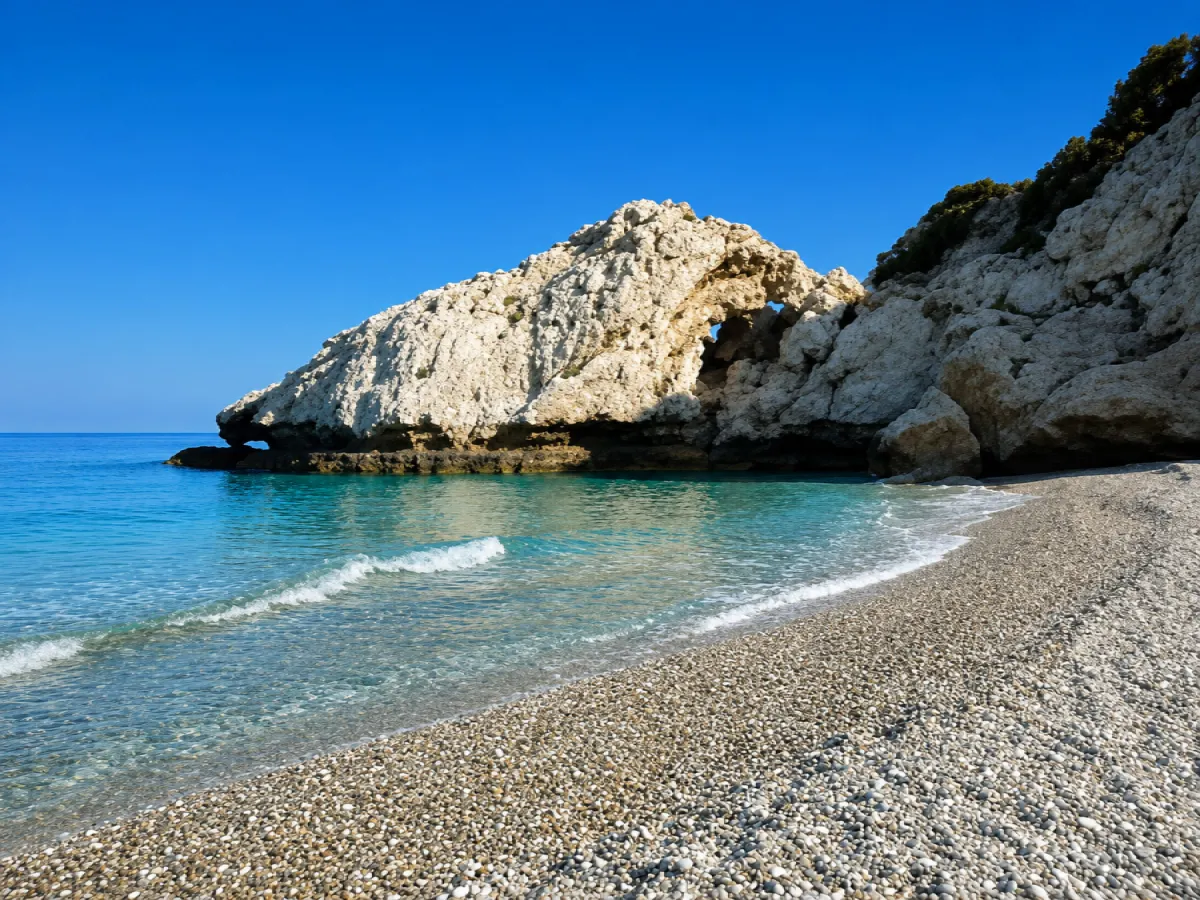
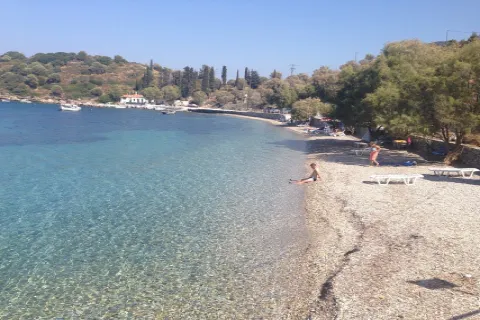
Mikro Seitani is one of the most impressive natural beaches on the northwestern coast of Samos. Hidden between steep white cliffs and dense Mediterranean vegetation, it forms a small and narrow cove with clear turquoise-green water and a strong sense of isolation.
It lies west of Karlovasi and Potami Beach and is the first of the two beaches reached by hikers along the well-known Potami – Mikro Seitani – Megalo Seitani route. Although it is closer to Potami than Megalo Seitani, no road reaches the coast, and final access is possible only by hiking or from the sea.
📍 Location
The beach is located along the northwestern coastline of Samos, within the wider area of Mount Kerkis and west of Karlovasi.
The trail begins on the western side of Potami Beach, initially follows the coastal road towards the west and then climbs through old olive groves, pine trees and cypress trees, with open views towards the northern Aegean. Mikro Seitani is the first beach reached by hikers before the route continues towards Megalo Seitani.
🗺️ The shape of the cove
Mikro Seitani is formed inside a small rocky inlet. High limestone cliffs surround the shore and greatly restrict the available space, creating the appearance of a natural gateway opening towards the sea.
The white and pale-coloured rock formations, low vegetation and turquoise water create striking colour contrasts. In certain places, large underwater slabs and rocky formations are visible beneath the surface because of the exceptional clarity of the water.
👿 The name Seitani
The name “Seitani” is associated with the Turkish word şeytan, meaning “devil”. According to local tradition, the unusual sounds produced by the wind and waves inside the rocks and sea cavities of the area gave earlier sailors the impression of a wild and mysterious place.
This interpretation forms part of local oral tradition and should not be presented as a fully documented historical fact.
🏖️ Size and composition of the shoreline
Mikro Seitani is a very small cove, with the official hiking-route description referring to a length of approximately 50 metres. Because of its limited size, the available space for towels and personal umbrellas is restricted.
The shore consists mainly of small white and pale-coloured pebbles, fine gravel and, in certain places, coarser material. The form of the beach may change because of winter wave action, which moves the pebbles and alters the width of the coastline.
It should not be described as a typical sandy beach. Its main character is pebbly, although small deposits of coarse sand may appear between the pebbles.
🌊 The water and seabed
The water at Mikro Seitani is exceptionally clear, with shades ranging from light blue and turquoise to emerald and deep blue.
The high level of clarity allows visitors to see the pebbles, underwater slabs and rock formations clearly. The seabed combines pebbles, stones and extensive rocky surfaces, especially along the sides and centre of the small cove.
The water often becomes deep relatively quickly, and the beach should not be described overall as shallow. The exact underwater shape varies depending on the entry point and wave conditions.
🪨 Water shoes
Water shoes are particularly useful because both the shore and the first metres of the seabed contain pebbles, stones and rocky surfaces.
They make entering and leaving the water easier, protect against sharp or slippery stones and are especially useful when waves are present.
🌬️ Northerly winds and waves
Mikro Seitani is located on the open northwestern coast of Samos and is affected by northerly and northwesterly winds.
Although the cliffs provide some protection along the sides, the cove remains open towards the northern Aegean. When strong northerly winds blow, waves enter the small bay and may break forcefully over the pebbles and underwater slabs. The northern coast of Samos can generally experience strong winds and rapidly changing sea conditions.
On days with light winds, the water may be remarkably calm and transparent. However, conditions must be checked before departure because the return journey once again requires hiking.
🛟 Swimming safety
There is no lifeguard, organised supervision or direct vehicle access for emergency services at the beach.
During strong wave conditions, leaving the water may become difficult because the waves push swimmers towards the pebbles and rocks. Inexperienced swimmers and young children should avoid entering the sea when large waves are present.
Clear water alone is not an indication of safety. Visitors must consider:
🌬️ The strength and direction of the wind
🌊 The height and frequency of the waves
🪨 The rocky slabs on the seabed
🏊 Personal swimming ability
🥾 The energy required for the return hike
🌿 Natura 2000 protected area
Mikro and Megalo Seitani lie within the Special Area of Conservation GR4120003 – “Samos: Mount Kerketeus – Mikro and Megalo Seitani”.
The protected area includes Mount Kerkis, the northwestern coasts of Samos, forests of Turkish pine and black pine and extensive Mediterranean shrublands. It also overlaps with the Special Protection Area GR4120008 – “Samos – Mount Kerkis”, which is important for birds of prey and other bird species.
Inclusion in the Natura 2000 network does not prohibit visiting or swimming. It does, however, require every visitor to avoid damaging vegetation, leaving rubbish, lighting fires or disturbing wildlife.
🦭 The Mediterranean monk seal Monachus monachus
The wider marine and coastal area of the Seitani beaches is associated with the presence of the Mediterranean monk seal Monachus monachus, a protected and endangered marine mammal.
The isolated coastline, rocky cavities and sea caves of the area may provide suitable resting and sheltering locations for the seals. Their appearance is not guaranteed and should not be presented as a common tourist attraction.
⚠️ What to do if a seal appears
If a Mediterranean monk seal appears in the water or on the shore:
🦭 Do not approach it or attempt to touch it.
📸 Do not surround it for photographs and do not use flash at close range.
🔇 Reduce noise and move away calmly.
🐕 Keep pets on a lead and away from the animal.
🚤 Do not follow it with a boat, kayak or other watercraft.
🪨 Do not enter caves or rocky cavities that may be used as shelters.
🌳 Natural shade
Unlike Megalo Seitani, Mikro Seitani does not provide significant natural shade from trees directly on the beach.
The high cliffs may create limited shade along certain sides and at certain times of day, but its position changes and should not be considered a reliable form of protection from the sun. The official route description advises visitors to bring an umbrella, hat and sunscreen.
Visitors should carry:
☂️ A lightweight personal beach umbrella
🧢 A hat
🧴 High-protection sunscreen
🕶️ Sunglasses
👕 Lightweight clothing for sun protection
🏖️ Organisation and facilities
Mikro Seitani is a completely unorganised beach.
There are no:
❌ Umbrellas or sun loungers
❌ Beach bars or canteens
❌ Restaurants or tavernas
❌ Public toilets
❌ Showers
❌ Changing rooms
❌ Lifeguards
❌ Rubbish bins with regular collection
❌ Taps with a confirmed water supply
Visitors must carry everything they need and take all their rubbish away with them when they leave.
💧 Water and supplies
There is no confirmed public tap or shop at Mikro Seitani. The water tap mentioned in the official hiking-route information is located at Megalo Seitani and should not be confused with a water supply at Mikro Seitani.
Every visitor should carry:
💧 Enough water for the outward journey, stay and return
🥪 Food or energy snacks
🧂 Something salty to replace electrolytes
🧴 Sunscreen
🧢 A hat
🗑️ A bag for all rubbish
🩹 A small first-aid kit for blisters and minor injuries
🥾 The hike from Potami
Mikro Seitani is the first stop on the official Potami – Mikro Seitani – Megalo Seitani route.
The complete route to Megalo Seitani is approximately 3.8 kilometres long, with an estimated duration of 1 hour and 40 minutes and a total elevation change of around 286 metres. Mikro Seitani lies earlier along the route and is generally reached after approximately 30–45 minutes of hiking, depending on the exact starting point, pace, heat and number of stops.
The trail passes through:
🌿 Old olive groves
🌲 Pine trees and cypress trees
🪨 Rocky and stony sections
🌊 Open viewpoints over the Aegean
☀️ Sections exposed to the sun
⏱️ Realistic duration of the excursion
For a visit only to Mikro Seitani, it is safer to allow:
🥾 Approximately 30–45 minutes for the outward hike
🏖️ At least 1–2 hours at the beach
🥾 Approximately 30–45 minutes for the return hike
The total time may increase because of the heat, photography stops, trail conditions and the physical fitness of the visitors.
Anyone continuing to Megalo Seitani should treat the visit as a long excursion lasting several hours or almost the entire day.
🪨 Difficulty of the trail
The official route is classified as having low technical difficulty, but it is not a flat urban walk.
It includes:
↗️ Uphill sections
↘️ Downhill sections
🪨 Stones and uneven ground
☀️ Areas without shade
🌿 Narrower passages through vegetation
After rain, the ground may become slippery. During the summer months, high temperatures significantly increase fatigue and the need for water.
👟 Essential hiking equipment
The route requires:
👟 Sports shoes with good soles or hiking shoes
🎒 A lightweight and properly fitted backpack
📱 A fully charged mobile phone
📍 A map or GPX file for offline use
🔋 A power bank
🩹 A small first-aid kit
☂️ A personal beach umbrella
The route should not be attempted in flip-flops or shoes without stable soles.
🌄 Continuing to Megalo Seitani
From Mikro Seitani, the trail continues westwards and eventually reaches Megalo Seitani.
The continuation requires additional walking through alternating exposed and shaded sections. The complete official route from Potami to Megalo Seitani is approximately 3.8 kilometres and takes around 1 hour and 40 minutes without long stops.
Anyone deciding to continue must calculate water supplies, energy levels and return time carefully to avoid being on the trail after sunset.
⛵ Access from the sea
Mikro Seitani can also be reached from the sea by private or chartered boat and sea kayak.
Organised sea-kayaking activities from the Potami area may include the coastline towards Mikro and Megalo Seitani. Access always depends on the wind, wave height, type of vessel and experience of the operator.
During strong wave conditions, disembarking onto the small pebble shoreline may be difficult or dangerous. The return journey must be organised in advance.
🅿️ Parking and starting point
There is no parking area at Mikro Seitani because no road reaches the shore.
Hikers leave their vehicles in the Potami area or at a permitted location close to the western beginning of the trail. The exact parking location may depend on local road conditions and seasonal traffic.
Vehicles must not block:
🚗 Traffic
🏠 Property entrances
🚑 Access for emergency vehicles
🥾 The entrance to the trail
🚌 Public transport
No public transport reaches Mikro Seitani.
Visitors must first travel to Karlovasi or the Potami area by private vehicle, rental vehicle or taxi and then follow the trail.
Anyone relying on a taxi should arrange the return journey in advance, as access and communication from remote locations may be more difficult.
👨👩👧👦 Is it suitable for families?
Mikro Seitani is not a typical family beach and is not suitable for families with babies or very young children.
The main limitations are:
❌ Hiking access
❌ Lack of natural shade
❌ Absence of toilets and drinking water
❌ No lifeguard
❌ Limited space along the shore
❌ Relatively deep water
❌ Possibility of strong waves
Families with older children who are experienced walkers may undertake the excursion only with proper preparation, suitable shoes, mild temperatures and calm sea conditions.
🤿 Swimming and snorkelling
On days with calm sea conditions, Mikro Seitani offers excellent opportunities for snorkelling.
The exceptional clarity allows visitors to observe:
🪨 Underwater rocky slabs
🐟 Small fish
🌊 Stony and pebbly seabed
🪸 Small marine organisms around the rocks
The small cove does not have an organised swimming area, equipment or supervision. Snorkelling close to the rocks should be avoided when strong waves are present.
🏖️ Naturism
Because of its isolation and natural character, Mikro Seitani is also used by visitors who practise naturism.
It is not an officially designated naturist beach. Since the available space is limited and the beach may receive many visitors during summer, respect for other beach users is essential.
👥 Isolation and crowds
Mikro Seitani is geographically isolated and far from road access and organised tourism facilities.
This does not mean that it is always empty. Because it is small, is the first beach on the well-known hiking route and is easier to reach than Megalo Seitani, it may become crowded during summer. The official route description notes that it often receives a significant number of visitors during the high season.
For greater tranquillity, it is preferable to visit:
🌅 Early in the morning
📅 On weekdays
🌿 During June or September
🔥 Fire precautions
Do not light fires, use camping stoves or set up improvised barbecues on the beach or along the trail.
The area is surrounded by pine trees, cypress trees, shrubs and dry Mediterranean vegetation, while there is no direct road access for fire engines.
Even a cigarette end, match or small piece of charcoal could cause serious destruction.
🌿 Protecting the beach
Every visitor should:
🗑️ Take away all rubbish.
🚭 Avoid leaving cigarette ends among the pebbles.
🌱 Avoid cutting branches or damaging vegetation.
🪨 Avoid entering caves and inaccessible cavities.
🔊 Avoid loud music and excessive noise.
🐕 Keep pets under control.
🦭 Avoid approaching wild animals or possible seal shelters.
Protection of the landscape depends on the behaviour of every individual visitor.
📸 Photography and views
The first view of Mikro Seitani from the trail is particularly impressive. From above, visitors can see the small white pebble shoreline, the limestone cliffs and the large underwater slabs beneath the transparent water.
The best times for photography are generally during the morning and before the strongest midday light, when the colours of the water are clearer and the rocks do not create excessively harsh contrasts.
📍 Approximate access details
🚗 Approximately 2.5–3 km from Karlovasi to the Potami area
🥾 Approximately 30–45 minutes of hiking from the beginning of the trail
🔄 Approximately 1–1.5 hours of total walking for the return journey, without long stops
🥾 The first beach on the Potami – Mikro Seitani – Megalo Seitani route
⏱️ The complete route to Megalo Seitani is approximately 3.8 km and takes around 1 hour and 40 minutes in each direction
⛵ Possible access from the sea, depending on wind and wave conditions
Times vary depending on the exact parking point, physical fitness, temperature and number of stops.
🚶 What to see and do
🥾 Follow the coastal trail from Potami.
📸 Photograph the small cove from the higher points before descending.
🌊 Swim only when wave conditions are safe.
🤿 Explore the underwater slabs with a mask during calm sea conditions.
🪨 Observe the distinctive white rock formations.
🥪 Organise a short daytime picnic and take all rubbish away.
🥾 Continue to Megalo Seitani only when you have enough time, water and energy.
🦭 Observe the natural environment without approaching caves or wild animals.
🌅 Begin the return journey well before sunset.
💡 Useful tips
👟 Do not attempt the trail in flip-flops.
💧 Carry enough water because there is no confirmed tap at the beach.
☂️ Bring a personal beach umbrella because there is no natural shade from trees.
☀️ Avoid hiking during the hottest midday hours.
🌬️ Check the northerly wind and wave forecast before setting out.
👡 Bring water shoes for the pebbles and rocks on the seabed.
📍 Download a map or GPX file for offline use.
📱 Carry a fully charged mobile phone and a power bank.
🩹 Bring a small first-aid kit.
🛟 Do not swim alone when waves are present.
🌙 Do not leave the return journey until after sunset.
🗑️ Take away everything you brought to the beach.
🏷️ Characteristics of the beach
🏖️ Small and narrow natural cove approximately 50 metres long
🪨 Small white and pale-coloured pebbles
🌊 Clean and exceptionally transparent turquoise-green water
🪨 Rocky and pebbly seabed with large underwater slabs
🌬️ Exposure to northerly and northwesterly winds
🌊 Possibility of strong waves
🏔️ Imposing white limestone cliffs
☀️ No significant natural shade from trees
🌿 Protected Natura 2000 area
🦭 Wider habitat of the Mediterranean monk seal Monachus monachus
🥾 Access via a hiking trail
⛵ Possible access from the sea
🚫 No organised tourism facilities
🛟 No lifeguard
🏖️ Also used by naturists without official designation
👥 May receive many visitors during summer because of its limited size
🧘 Suitable for nature lovers, hikers and experienced swimmers


Add new comment