
Myloi of Samos
🍊 Myloi, Samos – The Historic Village of Citrus Groves and the Imbrasos
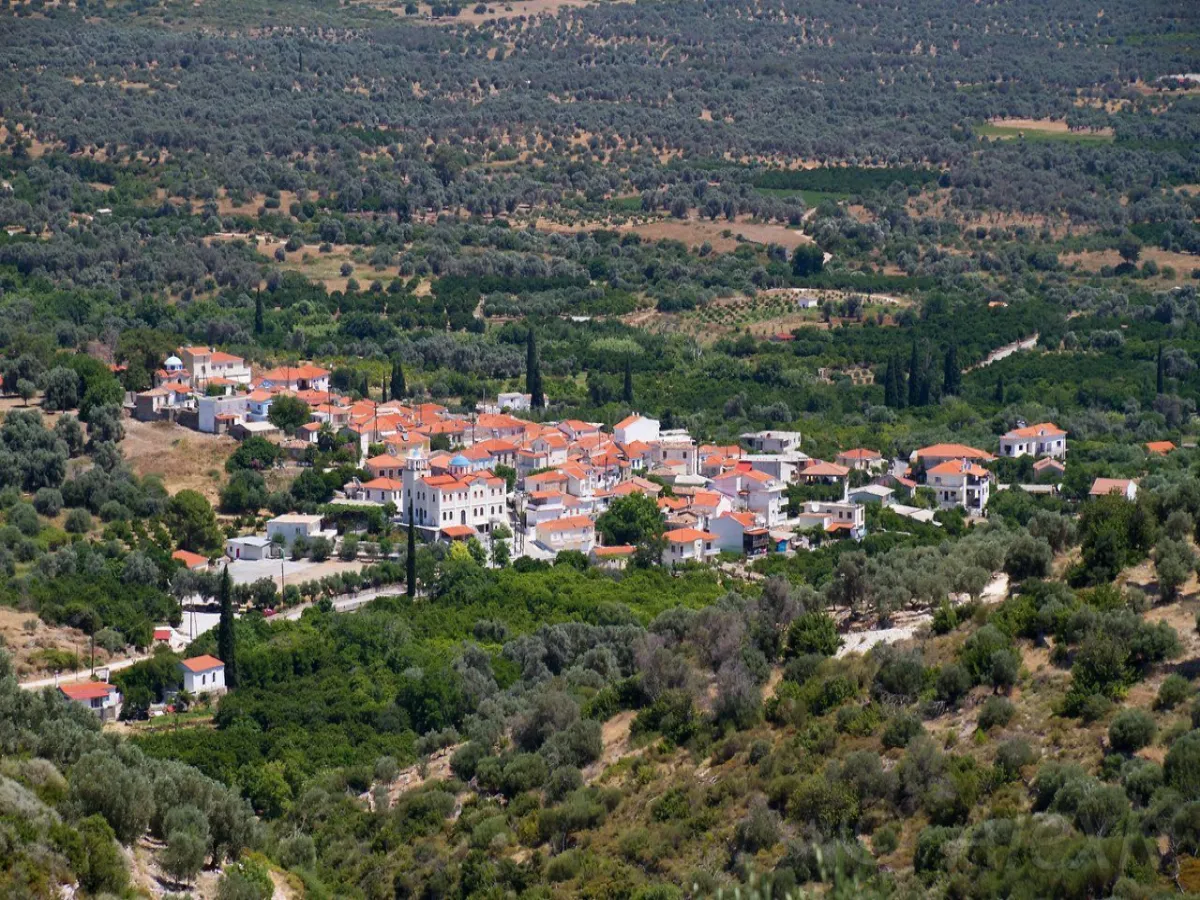
Myloi is one of the oldest villages of Samos, built in a fertile and lush area on the southern side of the island. The Imbrasos River, old springs, orange and lemon groves and a long agricultural tradition have shaped the village’s distinctive character.
The village preserves a peaceful everyday atmosphere, traditional houses, flower-filled courtyards and a shaded square with dining establishments. A visit to Myloi combines local history, religious monuments, flavours of the Samian countryside and exploration of one of the most fertile agricultural landscapes on Samos.
According to the 2021 census, Myloi has 232 permanent residents. Administratively, it forms the Municipal Community of Myloi, which belongs to the Municipal Unit of Pythagoreio and the Municipality of Eastern Samos. The municipality forms part of the Regional Unit of Samos in the North Aegean Region.
📍 Location and Character
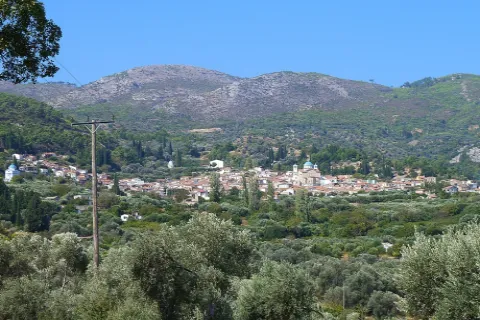
Myloi lies at the western edge of the Chora Plain, the largest flat and cultivable area on Samos. The village is built close to the eastern bank of the Imbrasos, at an altitude of approximately 60 metres.
The surrounding area is characterised by rich vegetation, citrus orchards, olive groves, cultivated fields and small rural roads. The presence of water created fertile conditions and enabled agriculture to develop on a relatively large scale for the island.
📝 The Name Myloi
The village’s name is connected with the watermills that once operated along the Imbrasos and the smaller waterways of the surrounding area.
The mills used the force of flowing water to grind grain and served both village residents and farmers from neighbouring areas. Their activity became so closely identified with the settlement that the place name Myloi, meaning “mills” in Greek, was permanently established.
📜 One of the First Villages of the Resettlement Period
Myloi was established during the first years of the resettlement of Samos, around the middle of the 16th century. Its early inhabitants included farmers, builders and potters, several of whom came from Patmos.
Its position near the fertile plain and abundant water encouraged the settlement’s rapid development. Agriculture, grain milling and pottery became important productive activities during the first centuries of its history.
🏛️ Administrative Development
Myloi was officially designated as the seat of the community of the same name on 21 September 1918.
Under the Kapodistrias administrative reform of 1997, the Community of Myloi was abolished and the settlement became part of the Municipality of Pythagoreio. In 2010, it was incorporated into the unified Municipality of Samos and, since 2019, has belonged to the Municipality of Eastern Samos.
👥 Population and Present-Day Life
Myloi had 525 residents in 1940, 404 in 1961, 265 in 2001 and 249 in 2011. The 2021 census recorded 232 permanent residents.
The village retains an active social and productive life. Agriculture remains important, while the square, dining establishments, local events and religious celebrations serve as meeting points for residents and visitors.
🏘️ The Form of the Village
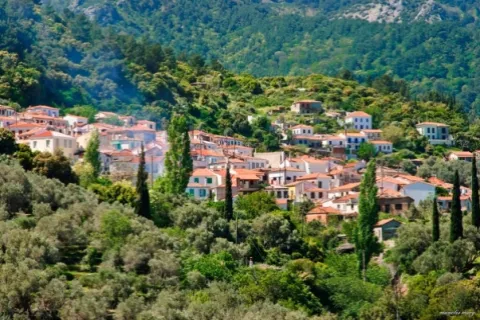
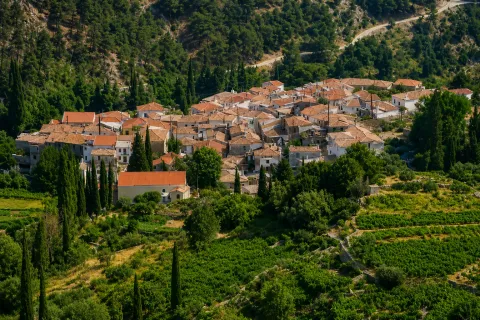
Myloi has a relatively regular layout, with houses grouped around the central square and along the roads leading towards the plain and the Imbrasos.
Traditional homes with tiled roofs, whitewashed façades, stone foundations, wooden doors and windows and flower-filled courtyards can be seen throughout the village. Newer and restored buildings stand among them without erasing the settlement’s simple rural character.
🌳 The Central Square
The square is the principal centre of social life in Myloi. Large trees provide natural shade, while the dining establishments around it offer meals, coffee and local flavours.
The peaceful atmosphere, traditional houses and everyday presence of local residents create an authentic environment away from the heavier tourism activity of the coastal resorts.
💧 The Imbrasos and Flowing Water
The Imbrasos is one of the most important waterways of southern Samos. It crosses the wider plain and is closely connected with the agricultural history of Myloi.
Its water was used to irrigate orchards, supply the settlement, operate watermills and support agricultural production. Its flow varies according to rainfall and season, with more water generally present during winter and spring.
🍊 The Citrus Orchards
Myloi is particularly well known for the production of oranges, lemons and other citrus fruits. The fertile soil, available water and mild climate created ideal conditions for the development of extensive orchards.
The fruit is consumed fresh and also used to produce juices, spoon sweets, marmalades, liqueurs and other local specialities. Olive trees, vegetables and additional fruit trees are also cultivated.
🎉 The Orange Festival
The Orange Festival is organised during spring by the Myloi Cultural Association “O Imbrasos”, with the exact date announced each year.
The event includes music, traditional dancing, games, crafts, food and orange-based products such as marmalades, liqueurs and sweets. It is one of the most characteristic agricultural festivals of Samos and celebrates the productive identity of the village.
⛪ The Church of the Life-Giving Spring
The historic Church of the Life-Giving Spring, known in Greek as Zoodochos Pigi, is one of the most important religious monuments of Myloi.
A carved and gilded wooden iconostasis dated 1739 survives in its northern aisle. Its sculptural decoration and age reflect the village’s long ecclesiastical tradition.
🙏 The Church of Agios Makarios Notaras
Near Myloi stands the historic Church of Agios Makarios Notaras, built around 1825 by the hieromonk Konstantios.
The church is connected with local traditions concerning the presence of Agios Makarios in the area. His memory is celebrated on 16 May, with religious services attended by residents and pilgrims from across Samos.
⛪ The Chapel of Agios Georgios
On a hill above the village stands the chapel of Agios Georgios. Its position offers views over Myloi, the Chora Plain and the wider southern side of Samos.
The route to the chapel is suitable for a short walk and photography, particularly during the morning or late afternoon.
🏺 The Pottery Tradition
Pottery was an important activity among the early inhabitants of Myloi. Potters produced practical vessels, containers, large storage jars and roof tiles for local households and agricultural use.
The craft continued in the area for many centuries and formed part of the village’s productive identity alongside agriculture and the operation of watermills.
🌿 The Surrounding Area and Routes
The rural roads around Myloi pass through orchards, olive groves and areas close to the Imbrasos. The landscape is suitable for peaceful walks, especially in spring when the citrus trees are in blossom.
A route of approximately 4 kilometres connects the village with Pagondas, following sections of rural and unpaved roads beside the valley. Road conditions should be checked before attempting the route with a conventional vehicle.
⛪ The Monastery of Megali Panagia
Approximately 3.5 kilometres north of Myloi stands the historic Monastery of Megali Panagia, founded in 1586 by the monks Neilos and Dionysios.
The monastic complex, the architecture of its main church and its lush surroundings make it one of the most important nearby places to visit while exploring the area.
🍽️ Food and Local Flavours
Dining establishments operate around the square and elsewhere in the village, offering Greek cuisine, grilled dishes, cooked meals and local specialities.
Depending on the season, visitors can look for fresh oranges and lemons, local olive oil, marmalades, spoon sweets, citrus liqueurs and products from small local producers.
🌿 What to See
During your visit to Myloi, take time to discover:
✅ The traditional village square
✅ The historic Church of the Life-Giving Spring
✅ The carved and gilded iconostasis dated 1739
✅ The Church of Agios Makarios Notaras
✅ The chapel of Agios Georgios
✅ The traditional houses and flower-filled courtyards
✅ The orange and lemon orchards
✅ The valley and the area around the Imbrasos
✅ The remains of former agricultural and milling activity
✅ The rural roads towards Pagondas
✅ The nearby Monastery of Megali Panagia
✅ The Orange Festival, when organised
🚶 The Visitor Experience
A visit can begin at the square and continue through the village lanes, the Church of the Life-Giving Spring and the old neighbourhoods.
You can then continue towards the orchards and the area around the Imbrasos or combine the visit with Agios Makarios, the chapel of Agios Georgios and the Monastery of Megali Panagia.
Approximately 60–90 minutes are sufficient for a basic walk through the village. With a meal, a visit to the orchards and exploration of the surrounding monuments, the excursion can last several hours.
📆 When to Visit
Spring: The best season for blossoming orange trees, green landscapes, flowing water and mild temperatures.
Orange Festival period: Ideal for local products, music, dancing and meeting village residents.
16 May: The feast day of Agios Makarios Notaras.
Summer: Morning or late afternoon is preferable for exploration, while the square provides shade and cooler conditions.
Autumn: Suitable for peaceful walks, agricultural activity and local flavours.
Winter: The village remains quiet, while the Imbrasos and local streams generally carry more water.
🧭 How to Get There
Myloi is accessible by paved road from Chora, Ireo and Pythagoreio. The route passes through the fertile plain of southern Samos and is suitable for a conventional car.
Myloi lies approximately 9 kilometres from Pythagoreio, 23 kilometres from Samos Town, 28 kilometres from Karlovasi and 25 kilometres from Marathokampos.
ℹ️ Useful Information
✅ Official name: Myloi
✅ Character: Historic agricultural settlement
✅ Location: Southern Samos, western edge of the Chora Plain
✅ Nearby waterway: Imbrasos River
✅ Administrative community: Municipal Community of Myloi
✅ Municipal unit: Pythagoreio
✅ Municipality: Eastern Samos
✅ Regional unit: Samos
✅ Region: North Aegean
✅ Official establishment of the community: 21 September 1918
✅ Population in 2021: 232 permanent residents
✅ Population in 2011: 249 permanent residents
✅ Altitude: Approximately 60 metres
✅ Main products: Oranges, lemons, olive oil and vegetables
✅ Historic activities: Watermills, agriculture and pottery
✅ Principal historic church: Church of the Life-Giving Spring
✅ Date of the iconostasis: 1739
✅ Religious monument: Church of Agios Makarios Notaras
✅ Feast of Agios Makarios: 16 May
✅ Local event: Orange Festival
✅ Nearby monastery: Monastery of Megali Panagia
✅ Distance from Pythagoreio: Approximately 9 kilometres
✅ Distance from Samos Town: Approximately 23 kilometres
✅ Distance from Karlovasi: Approximately 28 kilometres
✅ Distance from Marathokampos: Approximately 25 kilometres
✅ Postal code: 83103
✅ GPS coordinates: 37.6800, 26.8576
✅ Road access: Paved road
✅ Tourism facilities: Dining establishments and basic services
✅ Suggested visiting time: Approximately 1–4 hours
✅ Ideal for: Local history, rural landscapes, gastronomy, photography and peaceful exploration


Add new comment