
Mikri Lakka Beach on Samos | Nature and Crystal-Clear Waters
🏖️ Mikri Lakka Beach in Samos
A small secluded pebbled shore with pine trees, natural shade and calm turquoise waters on the eastern coast of Samos
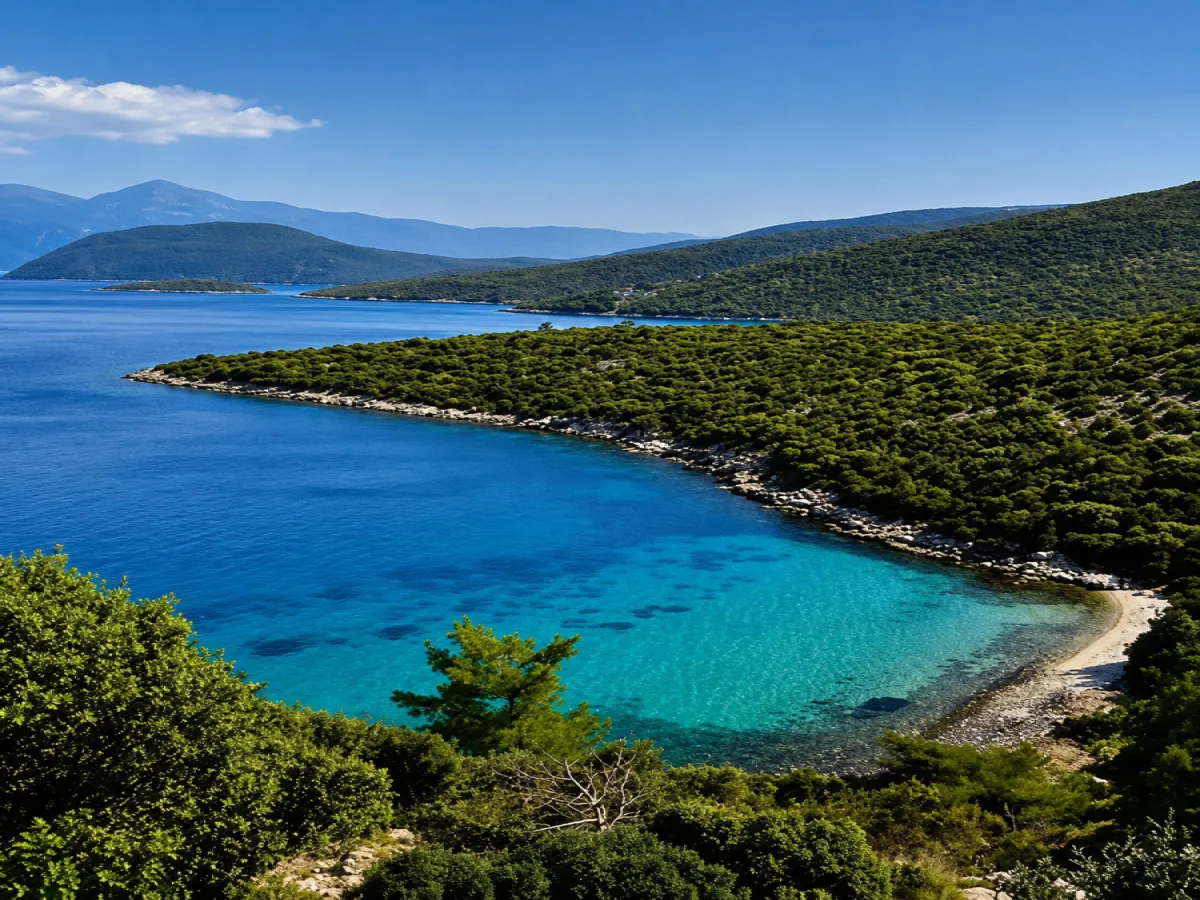
Mikri Lakka Beach is located on the eastern side of Samos, south of Mourtia and north of Megali Lakka. It lies inside a small natural bay surrounded by dense Mediterranean vegetation and pine trees that reach almost as far as the sea.
The fine pebbled shore, seashells, calm turquoise waters and absence of tourist facilities preserve its natural and secluded character. Access involves an unpaved road from Mourtia followed by a short walk, while the beach can also be approached from the sea by private boat.
📍 Location
Mikri Lakka is located in the wider Mourtia–Vlamari coastal area of eastern Samos. It is the northernmost of the two beaches bearing the name Lakka and lies approximately 670 metres, in a straight line, from Megali Lakka, which is situated farther south.
The shore is hidden between low, vegetation-covered hills and cannot be seen from the main road. Its secluded position, combined with the final walking section of the route, limits the number of daily visitors.
🏝️ The Bay and Natural Landscape
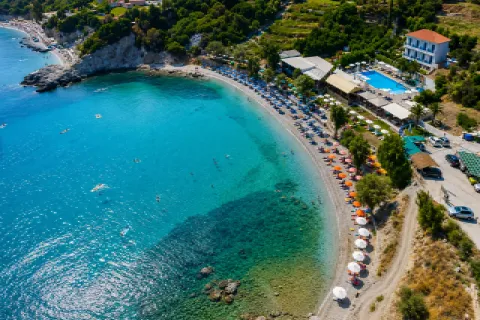
The beach lies inside a small bay surrounded by rocky slopes, shrubs and dense pine forest. Pine trees and other vegetation reach very close to the shore, forming a green natural frame around the turquoise waters.
In several places, tree branches provide natural shade at the rear of the beach. The shade moves throughout the day and does not cover the entire shore, so it should not be considered guaranteed for every visitor.
There are no large buildings, hotel facilities or organised developments beside the sea. The landscape remains particularly natural and is well suited to visitors seeking tranquillity and direct contact with the environment.
🏖️ The Shore and Its Composition
Mikri Lakka is a small and relatively narrow beach. The shore consists mainly of fine, light-coloured pebbles, small stones and seashells, while larger pebbles and rocky sections appear close to both sides of the bay.
The composition of the shore may change slightly after winter waves, as pebbles and other natural materials are redistributed within the small bay.
Water shoes are useful both for walking over the pebbles and for entering the sea, especially in areas where the seabed contains more stones.
🌊 The Water and Seabed
The waters of Mikri Lakka are clean and transparent, with colours ranging from pale blue close to the shore to turquoise and deeper blue towards the opening of the bay.
The seabed consists mainly of pebbles, small stones and rocky formations near the sides. The increase in depth becomes noticeable after the first few metres, and the beach does not have an extensive area of very shallow water.
The excellent visibility allows visitors to observe the seabed and marine life without moving far away from the shore.
🌬️ Wind and Waves
The beach’s position inside the small bay and the shape of the surrounding slopes provide protection from strong winds and large waves. On most summer days, the sea close to the shore remains calm.
The sheltered position does not prevent conditions from changing when strong winds blow from the direction of the bay’s opening. Visitors should check the weather before setting out, particularly when planning to arrive by small boat.
🤿 Swimming and Snorkelling
The transparent waters and relatively calm surface create good conditions for swimming inside the bay. The central section provides the most comfortable entry, while stones and rocky formations become more numerous towards both sides.
The rocky ends are particularly interesting for exploration with a mask and snorkel. Small fish, marine plants and the different textures of the seabed can be observed in these areas.
The wider area is also known for fishing and spearfishing, although caution is required because of the isolation and absence of lifeguard coverage. There is no organised equipment-rental service.
👨👩👧👦 Suitability for Families
The usually calm sea can provide an enjoyable swimming experience for families with older children who know how to swim and are comfortable with short walking routes.
The unpaved access road, narrow natural path, pebbled shore, absence of toilets and lack of any organised facilities make the beach impractical for families with babies or very young children.
There is no lifeguard or first-aid station. Children must remain under constant adult supervision and should not move towards the deeper water.
🥾 Access from Mourtia
The route to Mikri Lakka begins at Mourtia Beach. From there, an unpaved road continues southwest for approximately 1 kilometre, until the point where the footpath descending towards the shore begins.
The walking section is approximately 350 metres long and usually takes around 10 minutes. Red route markings are or have been present along the way, although their visibility may be reduced by vegetation.
The path is narrow and crosses natural, occasionally uneven terrain. Closed shoes or secure hiking sandals are recommended instead of ordinary flip-flops.
🚗 Unpaved Road and Parking
The section of unpaved road after Mourtia is described in local directions as passable, although its condition may change because of erosion channels, loose stones and rainfall. It should not be considered an easy route for every low-clearance passenger vehicle.
It is useful to check the condition of the road before setting out, particularly after winter or heavy rainfall. Drivers of rental vehicles should also check the terms of their agreement regarding driving on unpaved roads.
There is no organised parking area at the beach. Vehicles are left near the beginning of the path, only in a safe location that does not block access or prevent other vehicles from turning.
⛵ Access by Sea
Mikri Lakka can also be approached by private boat. The small bay is used as a temporary anchorage, mainly when sea conditions are calm.
Access by boat depends on the wind, waves and characteristics of each vessel. Swimmers should remain clearly visible to boats entering the bay and avoid the areas used for approaching the shore or anchoring.
⛏️ Traces of Old Mining Activity
The wider Mourtia–Mikri Lakka area contains traces of old mining activity and abandoned excavations. An old gallery or quarry opening is reported close to the route leading towards the path and forms part of the area’s mining history.
A scientific study published in 2025 records old diaspore-mining operations at the Mourtia–Mikri Lakka site, dating back to the 1930s.
The abandoned galleries and excavations are not visitor facilities. Entry should never be attempted, as there may be unstable ground, falling rocks and other hidden hazards.
☀️ Organisation and Available Facilities
Mikri Lakka is a completely unorganised beach. There is no beach bar, canteen, restaurant or permanent point selling drinking water, beverages or food.
There are no umbrellas, sun loungers, toilets, showers, changing rooms, rubbish bins or organised water-activity facilities.
Visitors must carry everything required for their entire stay, keeping in mind that all belongings and rubbish must also be carried back during the return journey.
♿ Accessibility
Mikri Lakka is not accessible to wheelchair users or people with serious walking difficulties.
The route includes an unpaved road, a narrow natural path, uneven terrain and a pebbled shore. There are no designated parking spaces, ramps, permanent mobility pathways or independent sea-entry systems.
🌿 The Atmosphere of the Beach
Mikri Lakka offers a strong sense of isolation, particularly during the morning and on days without small-boat traffic. The dense vegetation limits visual contact with the rest of the coastline and creates the impression of a hidden natural refuge.
The main sounds come from the sea, the wind and the natural life of the pine forest. However, the small size of the shore means that even a limited number of visitors can become noticeable.
The beach is better suited to visitors who accept the absence of comforts and are looking for peaceful swimming in a natural environment.
🤿 What Is Worth Doing
Swim in the central part of the bay, where entry into the water is more comfortable.
Explore the rocky sides with a mask and snorkel while remaining close to the shore.
Observe the changes between the pebbles, seashells and rocky formations.
Enjoy the natural shade of the pine trees and the view towards the opening of the small bay.
Photograph the contrast between the dense greenery and the turquoise waters.
💡 Useful Advice
Set out early in the morning so that the route can be completed before the highest temperatures of the day.
Wear closed shoes or secure hiking sandals and bring water shoes with you.
Carry enough drinking water, food, a hat, sunscreen and a small first-aid kit.
Do not rely entirely on natural shade, as the available areas are limited.
Allow enough time for the return route and begin before the natural light starts to fade.
Do not enter old galleries or abandoned excavations.
Do not light fires and take all rubbish with you when leaving.
⭐ Beach Characteristics
✅ Small secluded beach on the eastern side of Samos.
✅ Located south of Mourtia and north of Megali Lakka.
✅ Natural bay surrounded by dense vegetation.
✅ Pine trees and other trees reaching very close to the sea.
✅ Limited natural shade at the rear of the shore.
✅ Fine light-coloured pebbles, small stones and seashells.
✅ Clean and transparent turquoise waters.
✅ Usually calm sea due to the sheltered position.
✅ Pebbled and rocky seabed.
✅ Suitable conditions for swimming with a mask and snorkel.
✅ Access by an unpaved road and a short natural footpath.
✅ Walking section of approximately 350 metres and around 10 minutes.
✅ Also accessible by private boat.
✅ Traces of old mining activity in the wider area.
✅ Complete absence of organised facilities and amenities.
✅ Suitable for visitors who enjoy nature, tranquillity and short walking routes.


Add new comment