
🍋 Samian Pichti – Traditional Christmas Pork Aspic
🥣 Ingredients
For approximately 6–8 servings
- 500 g pork
- 2 pork trotters
- 1 whole head of garlic
- Juice of approximately 5 lemons
- ½ glass vinegar
- Salt
- Freshly ground pepper
- Water for boiling
For an even more traditional version
- Pork head instead of part of the plain pork meat
🎄 A taste of Christmas on old Samos
Pichti is one of those dishes that tells a story far beyond the recipe itself. On Samos, it is closely associated with Christmas and the traditional winter pig slaughter, a time when virtually every part of the animal was carefully used.
Traditionally, pork cuts rich in natural collagen were used, particularly the head and trotters. During the long simmering process, they produce a rich broth that sets naturally once chilled, without the need for commercial gelatine.
Garlic, vinegar and especially plenty of lemon juice give Pichti its characteristic sharp freshness, balancing the richness of the pork.
In the old Christmas tradition of Samos, the dish was prepared on Christmas Eve, left overnight to set and served the following day.
🐖 Pichti and the traditional pig slaughter
In earlier times, many households on Samos raised their own pig.
Shortly before Christmas, the animal was slaughtered and its meat had to be used carefully and preserved for the months ahead.
This domestic tradition gave rise to, or helped preserve, foods such as Pichti, pork frying dishes and other preparations designed to make use of every part of the animal.
On Christmas morning, pork dishes cooked with wine were common, while Pichti, prepared the previous day, also had its place on the festive table.
👨🍳 Method
1. Clean the pork thoroughly
Wash the pork trotters and the remaining meat very carefully.
If using a traditional pork head, it should already have been thoroughly cleaned by the butcher.
These collagen-rich cuts are important not only for flavour but also because they allow the broth to set naturally.
2. Boil the trotters
Place the pork trotters in a large pot and cover with water.
Simmer over low to medium heat until the meat becomes extremely tender and separates easily from the bones.
In a conventional pot this may take several hours. In a pressure cooker, approximately 1–1½ hours may be sufficient, depending on their size.
Skim off any foam that rises to the surface during cooking.
3. Cook the remaining pork
In a second pot, simmer the pork meat until completely tender.
Once cooked, remove the meat but reserve the broth.
Allow the meat to cool enough to handle safely.
4. Remove all the bones
Carefully remove the bones from the trotters and, if used, from the pork head.
Cut or pull the boiled meat into very small pieces.
Check thoroughly to ensure that no small bone fragments remain.
5. Combine the broths
Strain both broths very carefully and combine them in a clean pot.
Add the finely chopped meat and simmer for approximately 15 minutes, allowing the flavours to come together again.
6. Add garlic, lemon and vinegar
Crush or finely chop the garlic and add it to the pot.
Gradually add the lemon juice and vinegar, tasting as you go.
Pichti should have a noticeable acidity, but the exact balance depends on the lemons and personal preference.
Season with salt and freshly ground pepper.
7. Divide into bowls
Divide the meat and hot broth among deep bowls or small moulds.
Make sure each container has a good balance of meat and broth.
Allow them to cool slightly at room temperature.
8. Leave to set
Transfer the bowls to the refrigerator and leave the Pichti to set overnight.
As it cools, the natural gelatine in the broth solidifies around the pieces of meat.
By the next day it should have formed a firm yet tender aspic.
🍋 No commercial gelatine needed
In an authentic Pichti, when enough collagen-rich pork cuts are used and the broth has been reduced properly, commercial gelatine is unnecessary.
That is one of the most interesting aspects of the old technique: what we now buy ready-made as gelatine sheets or powder is produced naturally in the pot through the long simmering of bones and connective tissue.
🍽️ Serving
Pichti is served cold, directly from the refrigerator.
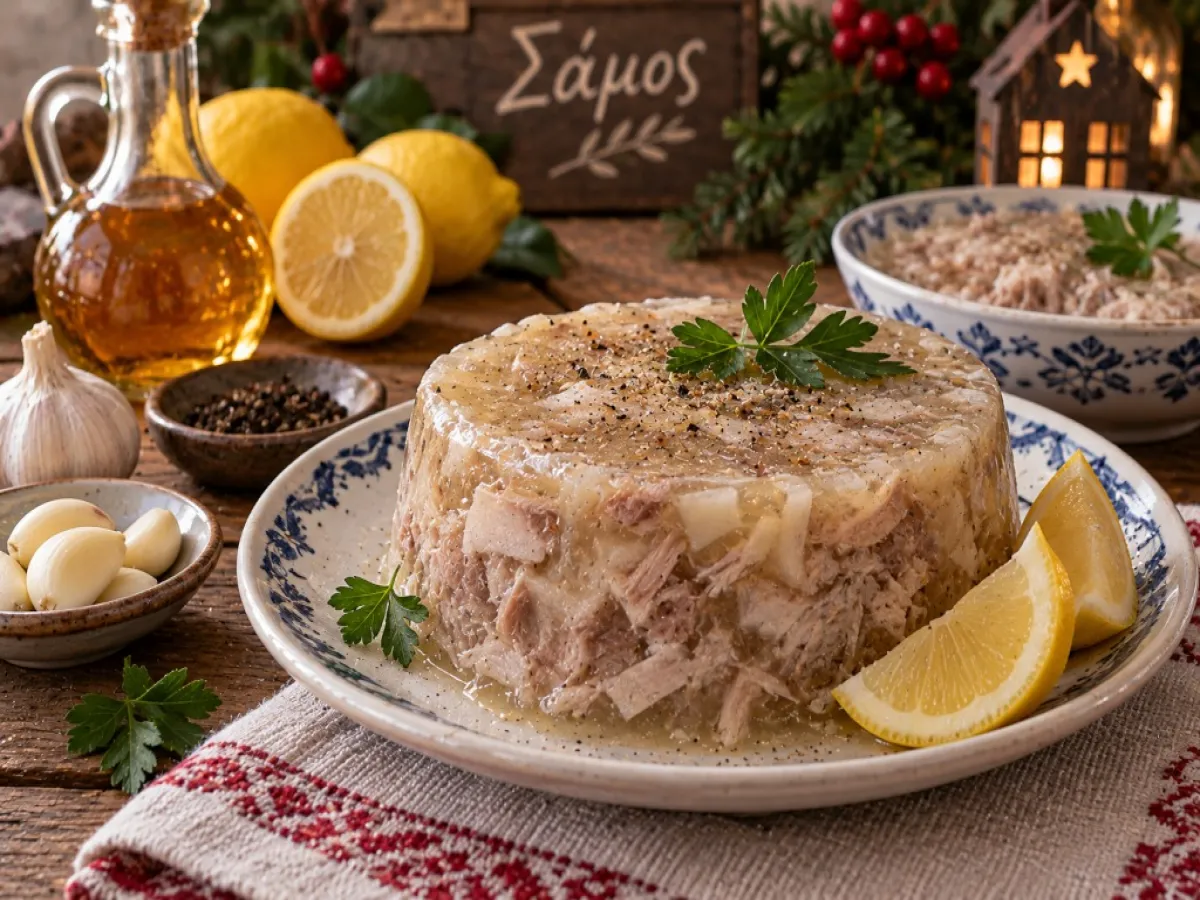
It can remain in its bowl or be carefully unmoulded onto a plate.
Extra lemon, freshly ground pepper and good bread are ideal accompaniments.
It is not a dish created to look fashionable or decorative. It belongs to a tradition of thrift, preservation and festive cooking — and that is exactly why it deserves a place in a serious guide to Samian cuisine.


Add new comment